
By the summer of 1943, Allied leaders had begun laying the groundwork for a major offensive across the Central Pacific. While the coming battles at Tarawa and the Gilbert Islands would become famous, the months preceding those operations are often overlooked. Between June and September 1943, American and Japanese air forces conducted reconnaissance missions, bombing raids, and strategic patrols across thousands of miles of ocean. These Central Pacific air operations played a critical role in shaping the campaign that would eventually carry Allied forces toward the Marshall Islands and ultimately Japan itself.
At the Casablanca Conference in early 1943 the Allies reaffirmed the Europe First strategy while endorsing the possibility of further offensive action against Japan. The need for an offensive across the central Pacific in the event of war with Japan had been part of American strategic thinking since the 1920’s. At the Trident Conference in May 1943 the Joint War Planning Committee was tasked with estimating the forces needed to mount an offensive against Japanese positions in the Marshall Islands. In June the committee released its estimate and recommendation.[1] The committee recommended delaying offensive operations planned for the end of June in the South Pacific (Adm. Halsey) and Southwest Pacific (Gen. MacArthur) until Marshall Island operations had been mounted and completed. This generated heated reaction and the recommendation was rejected. From the Navy’s perspective the central Pacific drive made sense. It provided an operating theater for their rapidly growing fleet and was the most direct route to the home islands of Japan. During June the idea of an intermediate step blossomed. That was to gain positions in the Gilbert Islands as a preliminary to invading the presumably more entrenched Japanese positions in the Marshall Islands.
The Strategic Shift Toward the Central Pacific
Admiral Nimitz June monthly summary included these observations:
Enemy air activity in the Central Pacific was conspicuous by its absence. U.S. air activity was devoted primarily to photographic reconnaissance of enemy bases, particularly in the southern Gilberts, most of which was accomplished by the 7th Bomber Command, staging through advanced bases.[2]
Japanese radio intelligence suggested possible American amphibious landings on Nanomea and Vaitupu in the Ellice islands. Headquarters 11th Air Fleet at Rabaul directed reconnaissance be conducted. On 5 June Air Group 755 sent three Type 96 land attack bombers from Tarawa to reconnoiter the islands.[3] Back at Tarawa flight leader W.O. Shojiro Hirabayashi reported no sign of bases or shipping on either island. Soon after this a tactical reorganization removed the 2nd Air Attack Force (22nd Air Flotilla) from the 11th Air Fleet order of battle and placed it under the local Eastern Force (4th Fleet) headquarters.[4] Possibly this command change resulted in a certain lassitude in Japanese operations. Nanomea and Nukufetau were occupied by U.S. Army, Marine and Navy construction battalion forces in August. Airfields there were operational in September and October, respectively.
Here are distances between some of the places mentioned in this article. Makin Island is 1,975 miles southwest of Oahu; 1,265 miles east of Truk; 450 miles southeast of Kwajalein; and 105 miles north of Tarawa. Nanomea is 350 miles east of Tarawa.
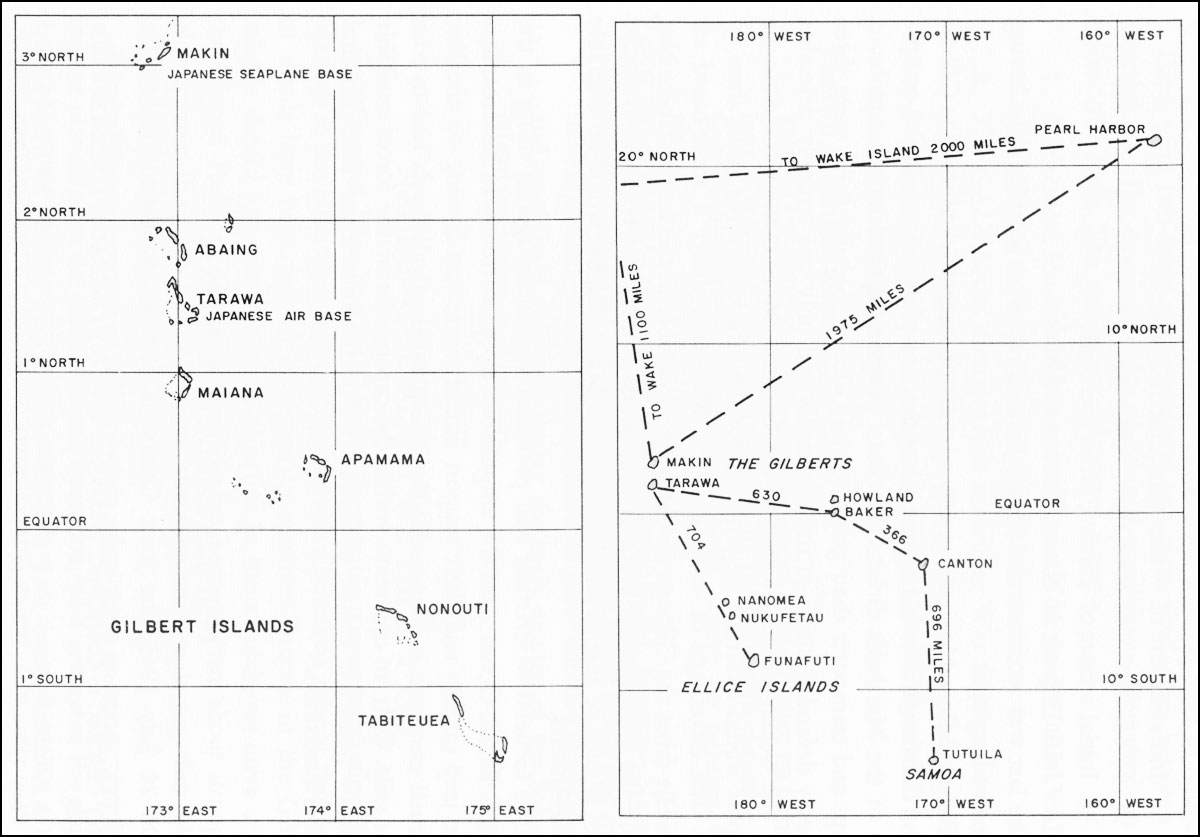
Central Pacific Distances Map 1943
On 22 June the Japanese mounted a distant reconnaissance mission to the Santa Cruz islands with group commander Cdr. Sakae Yamashita aboard the Air Group 755 rikko. Otherwise, as Admiral Nimitz indicated little was heard from the Japanese in June. The local air command (22nd Air Flotilla) reverted to 11th Air Fleet control several weeks later.
Reconnaissance Missions Over the Gilberts and Marshalls
The 7th Bomber Command deployed B-24Ds of the 11th BG to Funafuti from a staging base on Wallis Island to conduct a series of reconnaissance missions. These missions are interesting because they indicate the growing interest in the Gilbert Islands as well as the Marshall Islands as potential invasion targets and because of technological innovations involved. On 17/18 June three B-24s used photo-flash bombs to take night photographs of Mille Atoll in the Marshall Islands – the first night photo reconnaissance mission of the Seventh Air Force. Admiral Nimitz staff considered the photos excellent. Four other bombers were slated to fly diversionary bombing strikes against Tarawa in the Gilbert Islands. Taking off at intervals, one bomber aborted and one failed to locate the target. Two bombers got over Tarawa claiming to silence an AA battery and blow up an ammunition dump. Another diversionary attack was conducted against Nauru by six Navy PBYs two of which were damaged by AA fire.
On 18/19 June two B-24s dropped ten photoflash bombs taking night photos of Jaluit Atoll in the Marshalls. Japanese AA fire failed to inflict any damage on the Liberators. The following night the mission was repeated by three B-24s. Again, AA fire failed to damage the bombers. Night photography involved not only the photoflash pyrotechnic but also a specialized camera system.
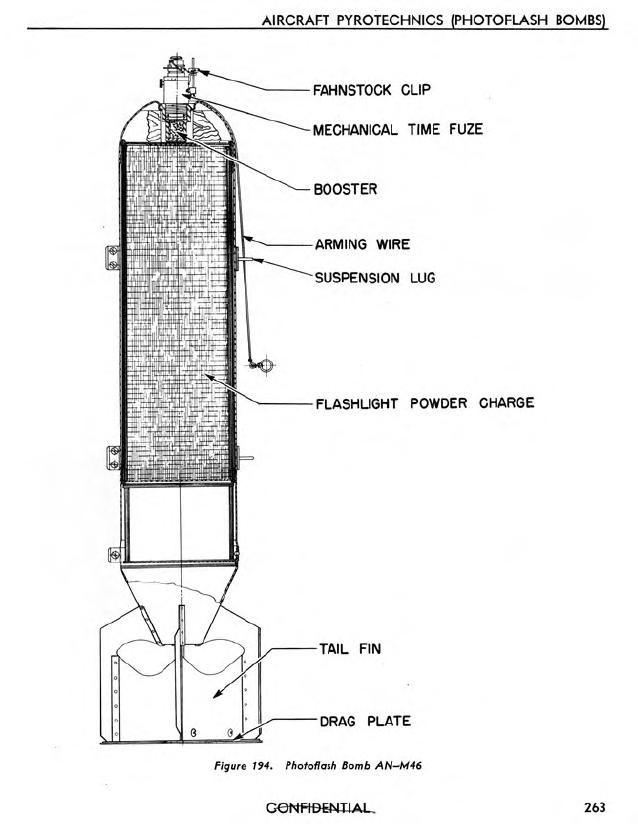
Photoflash Bomb Night Reconnaissance
On 21 June a single Liberator flew an armed photo reconnaissance mission over Beru and other islands in the Gilberts. Three 500 lb. bombs were dropped on Nonouti where a Japanese floatplane was sighted. There was no enemy opposition. The following day three B-24s flew a photo mission over several islands including Tarawa. On 24 June three 98th Bomb Squadron (BS) B-24s flew a visual reconnaissance mission over Nonouti, Tarawa and several other islands in the Gilberts. These missions showed there were no Japanese installations on most of the islands in the Gilberts.
B-24 Liberators and the Nauru Bombing Campaign
The string of successful reconnaissance missions was followed up by the planned second large-scale strike against Nauru scheduled for 28 June. The 11th BG had returned to Hawaii in April and received an influx of new personnel and new aircraft, B-24Ds. This mission showed it was not up to the standard of the 11th BG when it fought in the Solomons. The crews were referred to as “inexperienced” in the official Air Force history.[5] Twenty B-24s (nineteen from the 11th and one from Bomber Command HQ) were scheduled to arrive at Funafuti on 27 June for the 28 June attack. One crashed at Palmyra en route. Two B-24s at Funafuti were unable to join the mission due to engine trouble. The first Liberator down the runway crashed. Six others got aloft safely. Then another crashed on take-off. B/Gen. Truman Landon then stopped the rest from taking with only six bombers to carry out the mission. Four of those starting for Nauru became separated in a weather front or otherwise failed to find the target. Two bombed individually with unobserved results. AA fire was inaccurate but ten Zeros reportedly intercepted. One B-24 had the plexiglass in its nose shot out but both returned to base. The three Zeros that intercepted all returned safely to base.
For the 11th BG most of July was relatively quiet. South Pacific bombers were performing search missions that overlapped into the Central Pacific. Navy PB4Ys were flying up to ten missions daily northward from Guadalcanal out to 800 miles. These covered wedge-shaped sectors stretching from 150 degrees east to nearly 170 degrees encompassing Nauru and not too far from Ocean Island. On 27 July two VD-3 PB4Ys from Espiritu Santo staging through Funafuti conducted photo reconnaissance of Ocean Island. Navy PBYs serviced by a seaplane tender were flying missions northward from Vanikoro in the Santa Cruz Islands.
B-24s of the 42nd BS flew reconnaissance missions from Funafuti to Makin Island, seaplane forward operating base, on 7 and 11 July. On an 11 July photo mission bombs were dropped on Jaluit, Japanese seaplane base HQ of Air Group 802. The squadron sent six Liberators to bomb Betio I. in Tarawa Atoll on 18 July. The bulk of the 11th BG was back in Hawaii from where it staged through Midway for attacks on Wake I. to help keep the Japanese guessing as to American strategic intentions. This coincided with a Joint Chiefs of Staff decision on 20 July, conveyed to Admiral Nimitz the same day, to seize Japanese positions in the Gilbert Islands beginning 15 November.
Wake Island Raids and Japanese Fighter Resistance
For the first Wake mission on 24 July twelve B-24s moved to Midway. Two did not take off and two others failed to find the atoll. The remaining eight arrived over Wake in two formations of five and three B-24s a half hour apart. These dropped seven 500 lb. bombs, three 650 lb. depth charges and 55 fragmentation clusters on oil storage, barracks, and gun emplacements. A Nippon Times article was headed with the words “Enemy Raid Fails”. Japanese claims were for two B-24s destroyed and one damaged. The article asserted that one bomber “was downed by the daring self-blasting of a Japanese plane against it.” [6] Two other Japanese planes were also mentioned as lost. Air Group 252 scrambled eighteen Zeros against the formation of five B-24s and five more when the second formation appeared. They lost four pilots. One by collision and three others that failed to return. The Japanese could not determine which of the three enlisted pilots lost had rammed the Liberator. The Americans reported they were intercepted by 25-30 Zeros and an unidentified biplane in a running fight covering fifty miles. Most passes were from above or below level between the 10 and 2 o’clock positions. Claims were for nine destroyed, four probably destroyed and three damaged. The collision was with a Zero that was reportedly out of control. A second B-24 was wrecked when its damaged brakes failed on landing at Midway. Four returned badly damaged and two others slightly damaged.
Two days later another twelve plane raid was launched. Once again only eight Liberators got over the target where they dropped eighteen 500 lb. bombs, 29 frag clusters and 9 incendiary clusters. Interceptors were identified as Zeros and one possible FW-190. Their pilots were deemed to be skillful but not as aggressive as those on the previous mission. Gunners claimed eleven kills, eight probables and eleven damaged. Air Group 252 sent up sixteen Zeros. Only one Japanese fighter was lost. No Liberators were lost but three returned with significant damage and others suffered bullet and shrapnel holes. This was the last Army bomber raid against Wake until March 1944.
Japanese Counterattacks Across the Central Pacific
Japanese flying boats and land attack bombers hit American positions during the month. On 12 July a flying boat dropped bombs that missed Coast Guard cutter Taney operating near Baker Island. Flying boats were over Canton Island (Phoenix Islands) on 18 and 22 July without causing damage. Twelve land attack bombers of Air Group 755 operated from Tarawa from early July mainly flying sea searches and a few attack missions. On 19 July three bombers over Funafuti dropped eighteen 60kg bombs that caused some damage to the runway, facilities and a Bombing Squadron VB-137 PV-1 Ventura aircraft. On 21 July the Tarawa bombers were out in force.[7] Nine bombers in multiple bomb runs caused some material damage and seven casualties including two killed. As in the earlier raid, VMF-441 night fighters were ineffective. Marine 90mm AA gunners reported three bombers shot down, not verified in Japanese records.
The Japanese sought a way to retaliate for recent American bombings in the Gilbert Islands. W.O. Hasegawa of Air Group 755 flew a reconnaissance mission on 15 July (Japanese time) that sighted a seaplane tender and eight two-engine flying boats at Vanikoro island (Santa Cruz Islands). His radio report resulted in a bomber mission being launched from Nauru, the first of a series in days to follow. Two attacks on 16 July caused no damage. On the morning of 17 July, a Japanese raid characterized in American reports as sneaking in behind VP-71 PBYs returning from a night mission dropped bombs from 8,000 feet which resulted in near misses on seaplane tender U.S.S. Chincoteague bursting gas lines and igniting gas and pyrotechnics. The next attack caused no damage, but five misidentified “Sallys” led by Lt. (j.g.) Tsutae Sudo that followed at late morning scored a hit in the after engine room. Four hours later three bombers led by Lt. Yoshiaki Akiyama scored a near miss that caused considerable damage leaving Chincoteague dead in the water. She was in serious trouble. Three destroyers and a tugboat arrived to patrol and render assistance. The seaplane tender was taken in tow. Fighter cover was provided from Espiritu Santo (New Hebrides). There were additional attacks, but the final late day attack by three Nells was countered by a patrol of four VMF-214 Corsairs led by Maj. William Pace. One Japanese bomber was shot down in flames and a second never returned to Nauru. Through valiant efforts of her crew and assisting vessels Chincoteague survived. Nine of her crew were killed and the ship was out of the war for six months.
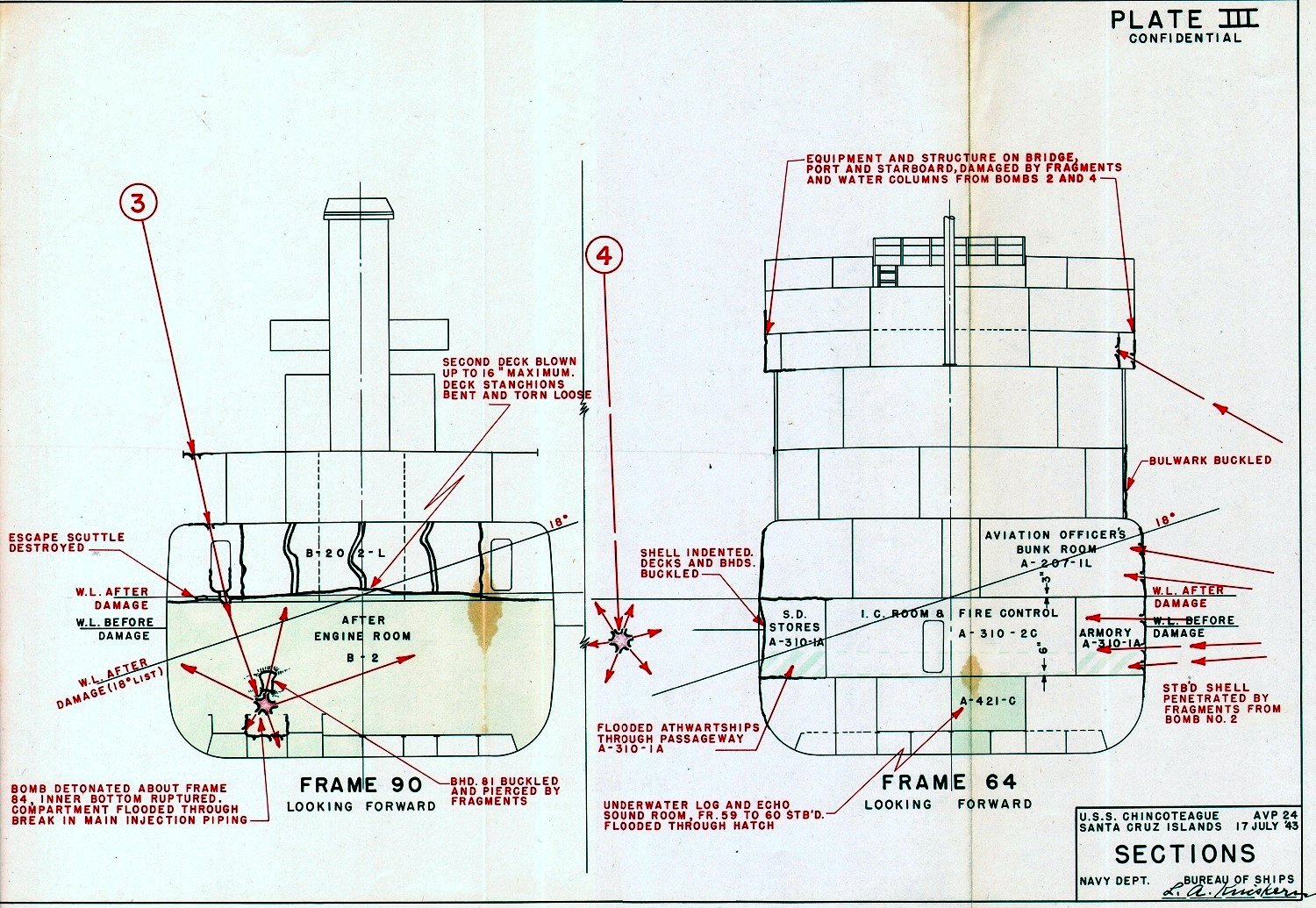
Chincoteague Bomb Damage Graphic
Building Air Power for the Gilbert Islands Offensive
Most of the American action in August was shaped by the Joint Chiefs decision to initiate offensive action in the Central Pacific. Bases within striking distance of the Gilbert Islands needed to be expanded. Forces were assembled to occupy and develop new positions. These included Nukufetau and Nanomea in the Ellice Islands and Baker Island (1 September). Most Army fighters were retained in Hawaii but squadrons were in place on Christmas Island and Canton. The Seventh Air Force had been supplying trained fighter pilots, twenty or more per month, for the Fifth and Thirteenth Air Forces for an extended period keeping many of its own fighter squadrons in a nearly continual state of flux. Navy and Marine airplanes helped to populate the new and expanded bases. July brought a surge of new fleet units. These included new Essex-class fleet carriers, Lexington and Yorktown, three new light carriers, two cruisers and twenty destroyers, as well as a variety of smaller craft. Many aircraft arrived including trained air groups for the new carriers. E.g., Air Group 16 had been training in Rhode Island since late in 1942 before boarding U.S.S. Lexington in mid-July. August provided time for training and working up to put a fine edge on these new resources. More ship assets continued to arrive.
An element of Air Group 755 began flying reconnaissance missions out of Tarawa with additional missions flown from Nauru. In addition to the Ellice Islands, missions were flown over Howland and Baker Islands and Vanikoro. Capt. William Boland of VMF-441 who scored a victory over a 755 Ku bomber in March shot down the Type 96 chuko flown by Aviator 1/C Yujiro Tagami on 9 August over Nui Island. The following day in the same area a Japanese bomber strafed the S.S. John Williams a 220-ton missionary vessel commandeered to support inter-island logistics. A few days later a PBY was damaged in a 25 minute fight with a Japanese Mavis flying boat. On the 16th PV-1 Venturas had run ins with Emily flying boats. In one case the Ventura was unable to engage. In the second, fire was exchanged and both aircraft were damaged. An American report stated the Ventura was “badly” damaged. The Japanese reported that their aircraft was hit and one crewman wounded. A week later a PBY flying from Canton engaged an Emily over Canton Island with no damage. U.S. reconnaissance included three Navy PB4Ys of VD-3 on a mission over Apamama in the Gilberts obtaining 100% photo coverage on 17 August. A suspected seaplane base appeared to be under construction. Several of the squadron’s Liberators were modified with specialized photographic equipment.
Near the end of August five Type 1 rikkos (G4M) arrived at Maloelap to begin an extended process of replacing 755’s Type 96 model 23 bombers and retraining their crews on the newer model. The unit’s table of organization was also increased to sixty bombers (45 initial equipment and 15 reserves). Air Group 755 operated its bombers with only one qualified pilot. Typically, crews included another member, “observer” navigator/bombardier or flight mechanic, with enough skill to keep the bomber on course and at flight level in order to give the pilot a break on long duration missions.
At the end of the month (west longitude time), an American task force made its way to Marcus Island far to the west (2,600+ miles from Pearl Harbor) to conduct a low risk strike with three of the new aircraft carriers and supporting fleet units. Damage was inflicted on Japanese facilities and aircraft on the ground. There was no air combat but some AA fire. Only three U.S. aircraft were lost including the first combat losses of F6F Hellcat fighters. Ships of the task force were not attacked and returned safely. Another task force including two aircraft carriers was also at sea in late August. Its purpose was to cover the landing of Army troops on Baker Island on the first of September. The ships were not attacked, but a snooping Type 2 large flying boat was shot down by a VF-6 F6F flying from U.S.S. Princeton for the Grumman Hellcat’s first air victory.
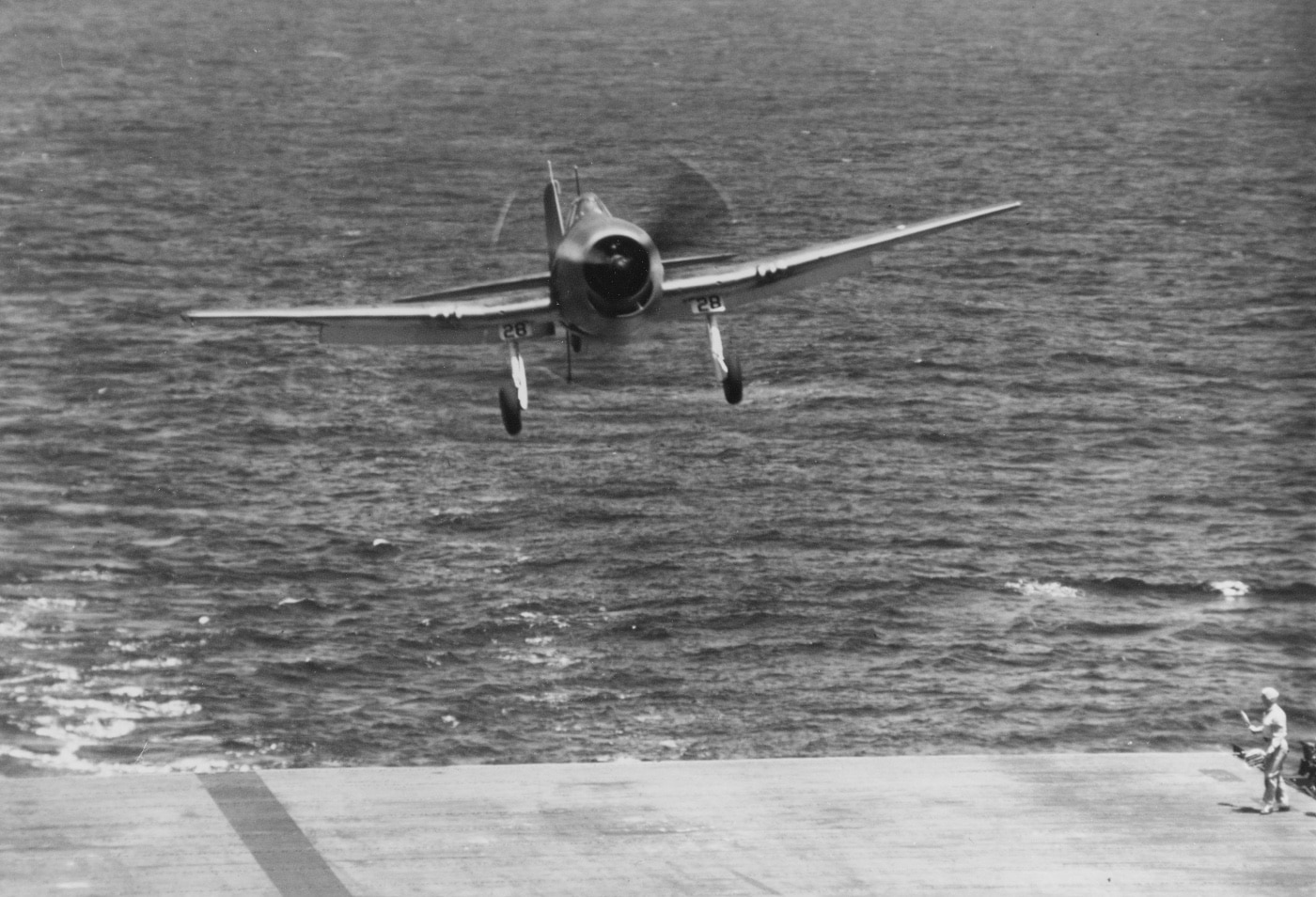
Hellcat Carrier Landing
The Air War Intensifies Before Tarawa
September began with Air Group 802 losing not just one Emily but two others on the third and eighth of the month. The one on the eighth survived a run in with six B-24s that fired 500 rounds at it only to fall victim to a Hellcat. A few days later nineteen P-40s of the 45th FS arrived to take over air defense of Baker Island. Eighteen 705 Ku Type 1 rikkos arrived at Kwajalein from Rabaul early in September remaining for a month. After the Marcus Island strike Air Group 755 beefed up its bomber force at Wake but in several days searching failed to sight any carriers. Their searches from Tarawa came up empty until 6 September when a T. 96 chuko crew sighted three vessels off Nanomea, strafed a sub-chaser and returned to Tarawa to report.
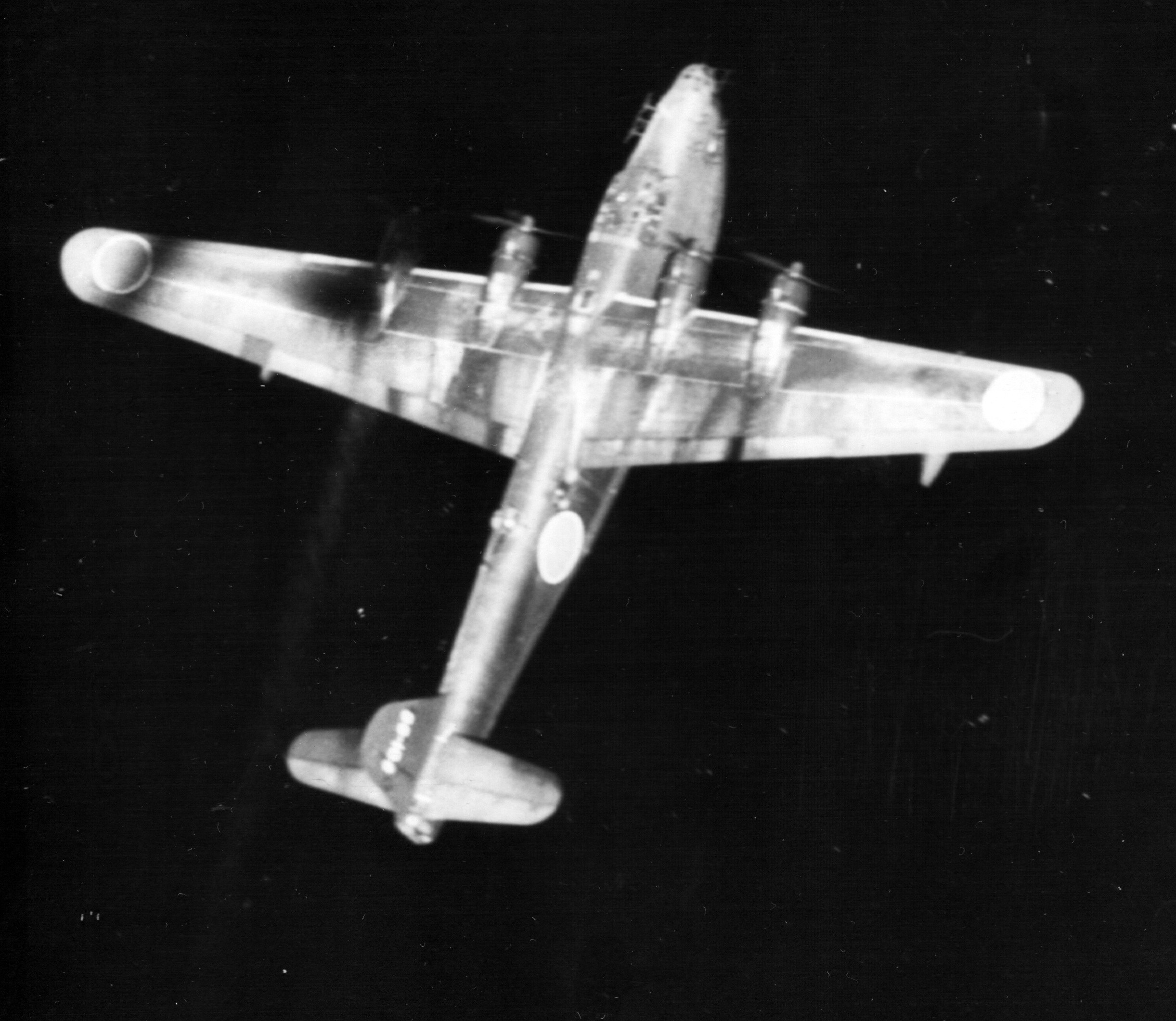
Type 2 Flying Boat Under Attack
Meanwhile strategic thinking had taken place on the Japanese side. Like the Americans they saw the Gilberts and Marshalls as linked. Since the U.S. Marine raid on Makin a year earlier the Gilberts, specifically Betio Island in Tarawa lagoon, had been undergoing personnel reinforcement and significant upgrade of defensive facilities. The Gilberts/Marshalls would be defended by primarily Navy garrison troops. The question of whether their aircraft carriers and main fleet units would counter an American naval intrusion into the area which was once certain was becoming less so. Perhaps Truk their major fleet base and the Caroline Islands were a better location for a decisive fleet battle. In September this question was unanswered although Japanese carriers did sortie to the area in what was in essence a practice mission.
Compared to later in the month when Japanese targets were hit in coordinated carrier-based and land-based raids, American operations in the first half of September were on a modest scale. Eight B-24s conducted search missions from Canton while Navy PB4Ys and PBYs continued their search missions from SoPac bases. The Japanese showed their nervousness by increasing their offensive tempo. On the eighth ten Type 96 rikkos bombed Funafuti causing minor damage and causing a dozen casualties including five killed. On a patrol mission five rikkos from Taroa reported two encounters with PBYs losing one plane with two others hit causing damage and injury to two crew members. A VB-137 Ventura failed to return from its search mission. A U.S. Navy communique made this pronouncement: On September 13, during the night, fifteen Japanese planes attacked Funafuti, Ellice Island. One enemy plane was shot down by antiaircraft fire. Material damage sustained was slight.[8] The Japanese press version asserted: Fiery columns of flames could be seen rising high in the air as Japanese Navy planes…launched four devastating attacks on Funafuti Island…All the planes returned safely.” [9] Damage on the ground included three casualties and two PV-1s destroyed in flames. All the Japanese planes returned to base. Five had suffered damage. On the fifteenth an 802 Ku large flying boat flew all the way to Espiritu Santo to drop sixteen 60kg bombs. The Japanese considered the attack successful. It went unnoticed by the Allies.
The stage was set for the Americans to increase their offensive pressure in the lead up to amphibious operations in the Gilbert Islands scheduled for November. Both carrier-based and land-based forces would play a role.
Footnotes
[1] JPS 205 “Operations Against the Marshall Islands” (10 June 1943), cited in Crowel & Love, Seizure of the Gilberts and Marshalls, U.S. Army (1955), p.20.
[2] CinC Pacific, Operations in Pacific Ocean Areas – June 1943, (6 September 1943), para. 36.
[3] Japanese terminology: rikko = land attack bomber or chuko = medium bomber; U.S. codename, Nell.
[4] Izawa, Rikko and Ginga, unpublished English language draft (1995), p. 148 (copy in possession of author).
[5] Craven & Cate, The Pacific: Guadalcanal to Saipan, Univ. of Chicago Press, Chicago (1950/1983), p.286.
[6] Nippon Times (Eng. Lang. ed.), 27 July 1943, p.1.
[7] Air Group 755 kodochoshos for dates indicated. Note ii for July 1943 (21 October 1943), paras. 35-37.
[8] Navy Department Communique No. 464, 14 September 1943.
[9] Air Raid on Funafuti Base is Vividly Told by Scribe, Nippon Tines (22 Oct. 1843), p.2.
Excellent analysis!
yahoo,im go