
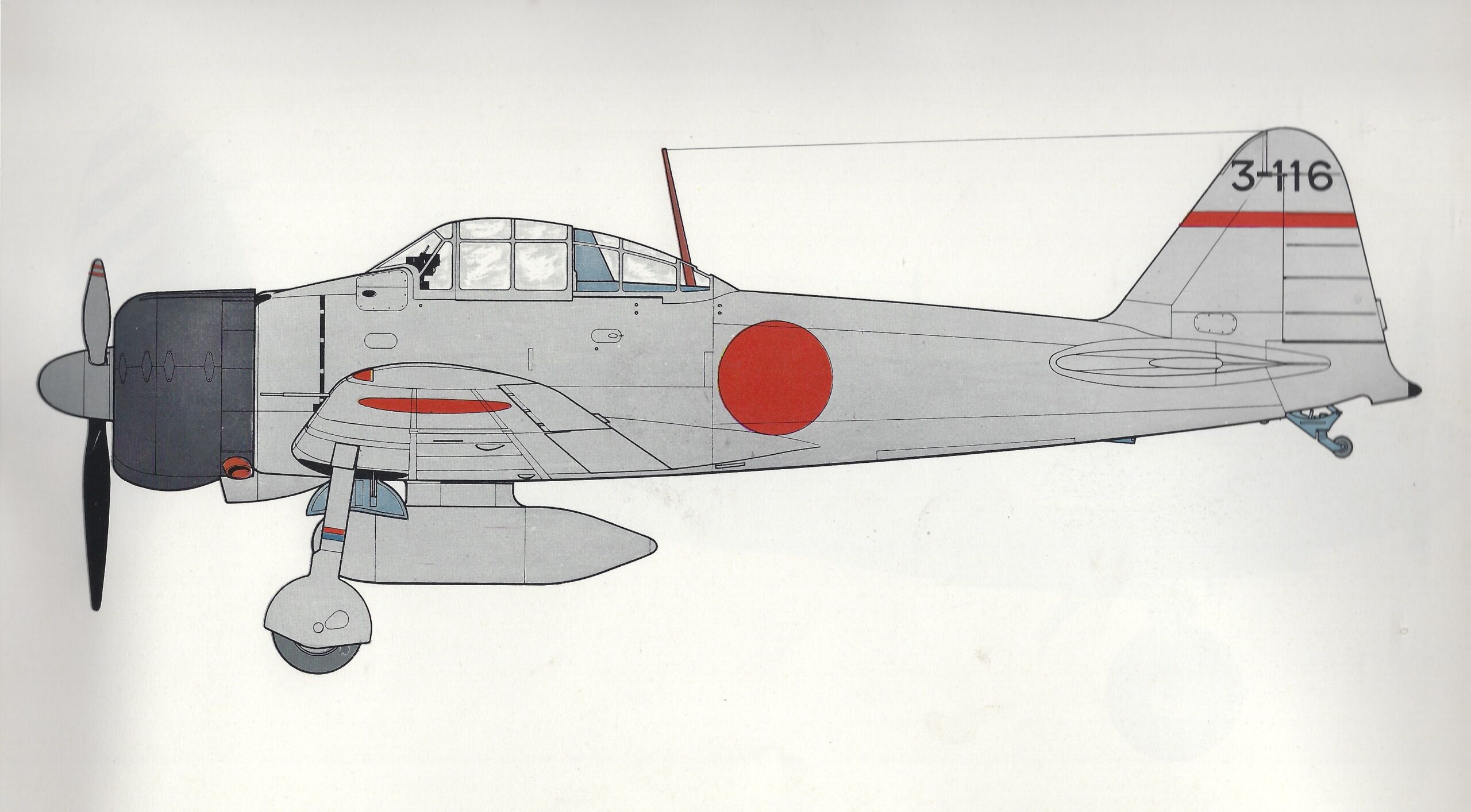
In the summer of 1940, the Mitsubishi Type Zero carrier fighter fresh from service testing was sent to China for its introduction to combat. From its first engagement with Chinese fighters, it achieved amazing success. Chinese fighters soon began avoiding combat. Over a period of a year Zeros claimed more than one hundred air victories with even more strafing success. Only three Zeros were lost: none in air combat. The Chinese Air Force was essentially neutralized. In September 1941 the Zero air groups in China (12th and 14th Kokutai) were deactivated in preparation for the outbreak of war in the Pacific. For most of the Pacific war period Zeros were absent from China.
Hainan Island
The Japanese occupied Hainan Island in 1939. Hainan is about 160 miles long on its northeast-southwest axis, roughly along a line from Hoihow to Sanya (Samah), and it is about ninety miles wide. In 1943 its mountainous interior was rugged covered with tropical vegetation or densely forested. Although generally underdeveloped Hainan exported rice, livestock, forest products as well as some rubber and sugar. Hainan Straits provided an important steamer route from Hong Kong and other south China ports to Haiphong and other ports on the Gulf of Tonkin. Hoihow was Hainan’s chief port. Samah Bay in the south had been a departure point for the Japanese invasion of Malaya at the outbreak of the Pacific War. The Japanese maintained light naval forces both at the north and south of Hainan.
The air garrison of Hainan was a Japanese Navy responsibility. During 1942 this consisted of a few seaplanes and carrier attack bombers assigned to the Hainan Naval Guard District and the China Area Fleet. By 1943 the Japanese Navy moved part of its air training establishment out of the Homeland. A training group was activated at Sanya with operating locations there and at Hoihow. Training at Formosa and Hainan moved training establishments closer to the source of fuel (“Southern Resource Area”), reducing both shipping time and shipping losses. It also reduced congestion at Homeland bases.
On 4 May 1943 the first raid by U.S. Fourteenth Air Force heavy bombers (16 B-24s of the 308th Bombardment Group) was mounted against warehouses and wharves at Samah Bay. No aerial opposition was encountered but bomber crews reported sighting three unidentified biplanes in flight as well as several aircraft on one of two airfields in the area. Later American intelligence received a Chinese report of uncertain reliability stating as many as twenty aircraft had been destroyed or damaged on the ground. This attack was probably the reason the Japanese Navy dispatched nine Zero fighters to provide air defense for its assets on Hainan Island and nearby locations in mainland China.
The first Zeros reportedly arrived in May but little about their activity is clear. Unit records for early operations apparently do not exist, and Japanese press accounts are absent. Thus, Allied reports provide our primary source for these early Zero operations. In October the air defense Zeros were integrated into Air Group 254 and additional Zeros arrived at Hoihow and Samah as equipment for operational training units. While less than definitive this article fills in parts of a void providing information ignored or not addressed as accurately elsewhere.
First Encounters
The first evidence of the presence of Zeros on Hainan came on July 3rd when two P-40s making a reconnaissance over Hoihow were chased by six Zeros. The first combat came on July 27th when fifteen B-24s of the 308th Bomb Group attacked shipping in Samah Bay (five failed to bomb due to cloud conditions). Ten minutes after the bombing Zeros caught up with the B-24s. Returning crew members numbered the attackers as 25 to 30 fighters and claimed there were three types: Dark green to mustard colored Zeros with elliptical wings, Zeros with long tapered wings, and dark colored Messerschmitt types with in-line engines. Fourteen were claimed as confirmed kills and six as probables. Claiming more victories than enemy fighters present was not unusual for 308th BG gunners. Probably less than half the number claimed were involved in the interception. Aircraft misidentification was hardly rare in China or elsewhere. Several Liberators were hit. One returned on three engines, and four crew men were wounded. The mission report stated:
Our crews who were in combat over Ichang report that the Jap pilots at Samah Bay were better flyers, and better gunners than those at Ichang.
B-24 attacks were limited by bad weather for part of August. Then serious losses in unescorted missions later in August and September limited them to targets within fighter escort range. Although the Fourteenth Air Force gave priority to sea searches and attacks on ports such as Canton, Hong Kong and Haiphong there were few incursions over Hainan in the next couple months and no verifiable combats involving Zeros.
More Zeros
The air defense of Hainan became better organized on 1 October 1943, when Air Group 254 was activated at Sanya. In addition to twenty-four Zeros (likely two chutais of nine Zeros each plus six reserve aircraft) the group was authorized four carrier attack planes and a transport. At least part of the unit was at Sanya as of the date of its organization. Patrol flights by three Zeros daily began on October 2nd. By mid-October two flights of three were being flown daily suggesting additional Zeros had arrived. Carrier attack planes also flew daily patrols. A detachment operated from Kiungshan airfield near Hoihow. In mid-January 1944 a detachment was sent to Kaitak airfield near Hong Kong. Convoy cover over the Yangtze River was occasionally provided by Zeros temporarily operating from Pailuchi northeast of Tungting Lake. Air defense along the Yangtze or Hong Kong was duty shared with the Japanese army so called “cooperative operations”.
Group commander was Capt. Kuro Hori. Flight leader, Hikotaicho, was Lt. Isamu Matsubara commissioned after graduating from the very first Aviation Reserve officer class in 1935. Much of his flight experience was in seaplanes. The senior flight section leader (buntaicho) Lt.(j.g.) Hiroshi Maeda was a Naval Academy graduate but had hardly six months of operational flying experience. The Kiungshan detachment commander was Lt. (j.g.) Gi-ich Minami.
The 254 pilots were a mixed bag, from journeymen to relative newcomers. Interestingly one of the least experienced, Seaman Kurimichi Kato who was twenty years old, graduated from pilot training in January 1943, was to become 254’s leading ace. Assigned to Hainan directly from operational training at Omura, Kato was an expert rifle marksman useful background for a fighter pilot. He was credited with nine victories during his year with 254. For most of their first month on Hainan 254 pilots flew routine patrols allowing them to gain flying time and become acquainted with the area.
On 26 October, 11th Bomb Squadron (BS) B-25s struck shipping at Hoihow in the morning without being intercepted. In the afternoon six more B25s carried out a low-level attack against shipping and Kiungshan airfield. The B-25s observed twelve aircraft on the field claiming a twin engine aircraft destroyed and a Zero damaged by strafing. Ten Zeros got up and at least two engaged the B-25s. A Zero pressed an attack on a B-25 from above, in front and slightly from the left (10 o’clock). Machine gun and cannon hits on the B-25’s right wing caused an explosion breaking off the wing just outside the engine nacelle. B-25D No. 41-30455 piloted by 2Lt. Herbert Hempe crashed into the sea. A second damaged B-25 crashed on the mainland while attempting to return to base. The Japanese fighters claimed two B-25s destroyed while a Japanese press report made it three crediting a combination of air and AA action. B-25s claimed a Zero probably destroyed. Two Zeros went down. After these losses Air Group 254 had sixteen Zeros of which only nine were operationally available. Six were overdue for depot overhaul (probably those inherited from the original Zero contingent) and could not be used operationally.
Soon after this the Haikou and Sanya Air Groups each received several Zeros, expanding their operational training. The units, located at Hoihow/Kiungshan and Sanya respectively, were subordinated to the 14th Combined Air Group on Formosa rather than the Hainan Guard District.
With the Fourteenth Air Force devoting a substantial effort to supporting Chinese army ground operations its anti-shipping operations in October and November were somewhat limited. American strikes against targets in the Amoy area, Hong Kong and Haiphong predominated. Still there were missed opportunities for the Hainan Zeros. On 8 November two B-25s visiting Hainan Island claimed hits on grounded aircraft. B-25s attacked shipping in the Fort Bayard area just north of Hainan on the fifteenth and ten B-25s conducted an anti-shipping sweep through Hainan Strait and beyond on the nineteenth. The absence of interceptions may indicate the Japanese Navy early warning capability was lacking. Two B-25s on a sea sweep over Hainan Strait had an inconclusive brush with fighters they misidentified as Tojos on 21 November. The record for December reflects a similar paucity of combat. Air Group 254 increased its number of operational Zeros. Meanwhile Type 96 (Nell) land attack bombers had been added to Hainan’s anti-submarine capability. This mission was shared with carrier attack bombers of Air Group 254 and seaplane units.
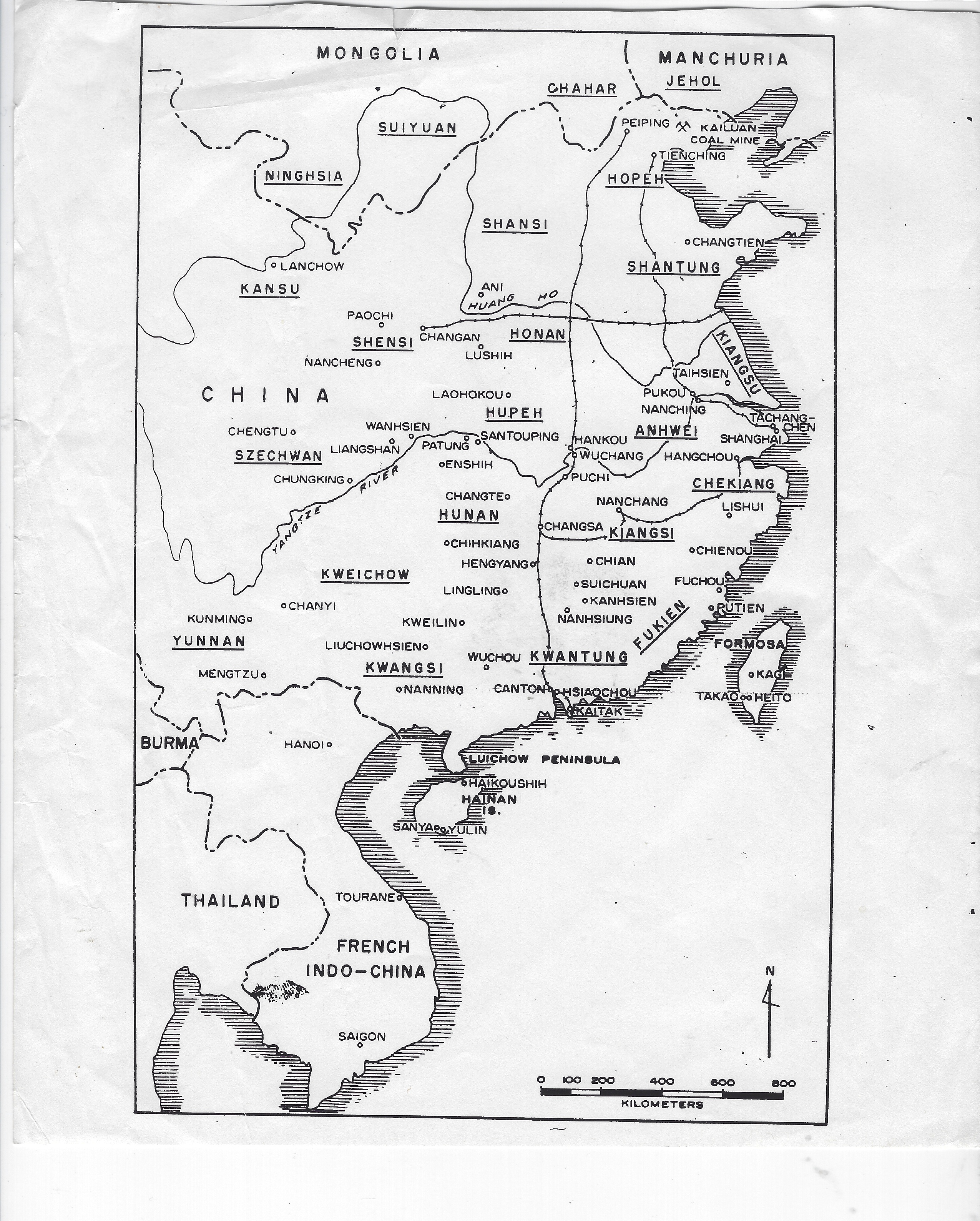
Map showing American and Japanese bases
On 13 January 1944 two B-25s hit shipping at Fort Bayard and got away without being intercepted. Later the 254 Zeros detached to Kaitak in mid-month for “cooperative operations” with army fighters got into action. Their first “action” reputedly came on the 22nd. Ten army Type 2 fighters of the 85th Hikosentai (Flying Regiment/FR) found themselves on the receiving end of an attack by the newcomers. One army fighter was reportedly damaged before the mistake was discovered. Surprisingly (or not so surprisingly) no 1/22 mission report (Kodochosho) of 254 contains data on ordnance fired. Mission reports of 254 seem shoddy and incomplete compared to other Kodochoshos I have tried to decipher. Such events unfortunately happened.
Combat the next day instead of being entirely between Japanese was quite international. Off from Kweilin headed for Kaitak were nine B-25s of the 11th BS and twenty-eight P-40s led by Col. Tex Hill. Twelve P-40s (one returned early) were from the U.S. 74th FS. The rest were from the 3rd FG, Chinese American Composite Wing (CACW). A flight of four Zeros responded late to their intrusion followed by a second flight of two. The bombers made their run before being intercepted but most of their bombs missed the target. The intruders had cleared the Hong Kong area before the interceptors, five according to the U.S. report, caught up. One fighter made a pass at the bombers and was claimed as a probable kill by a top turret gunner. Then the Allied fighters kept the Zeros away from the bombers. A U.S. pilot claimed an Oscar damaged. Another 74th pilot was shot up but survived the crash of his P-40. A second U.S. pilot with a damaged engine landed at a transport field. His P-40 up-ended with its nose in the ground. CACW pilot Capt. James T. Bull claimed a Hamp destroyed. All six Zeros returned safely claiming one P-40 destroyed and two damaged.
On 11 February six Zeros scrambled to confront a reported twelve B-25s and fifteen P-40s. Once again, the fighters were a mixed bag of six P-40s of the 74th FS led by Maj. Barry Melloan and fourteen others of the CACW 32nd FS. In addition, army Type 2 fighters of the 85th FR which were patrolling at low altitude also were involved. Pilots of the 74th reported encountering 9-12 Hamps, Oscars and Tojos. The CACW pilots estimated that twenty Japanese fighters intercepted. The B-25s were little troubled by the interceptors and reportedly about half their bombs hit their targets. 1Lt. George Lee, flying a P-40M, claimed two victims before being shot down and surviving despite a leg wound. A second 74th pilot was shot down but also returned. Two CACW pilots were also shot down. 1Lt. Donald Kerr flying a P-40N survived but Lt. Y.C. Yang was killed. Two Zeros were shot down with their pilots killed. 254 claimed two P-40s and a B-25. The 85th FR claimed two P-51s and two P-40s without suffering any verified loss.
At mid-month in February the Hong Kong detachment advised 254 headquarters that it had six aircraft on strength, and all were serviceable. The loss of two aircraft during the preceding month was also reported. A few days later an intercepted message directed the Hong Kong detachment to provide a four-plane escort for a plane carrying a VIP from Hong Kong to Samah.
Nanning a forward operating base of the Fourteenth Air Force was becoming the source of an increasing number of attacks on objectives on Hainan Island. On the 14th nine Zeros flew an early morning mission to Nanning about 200 miles northwest of Hoihow. There they reported encountering three P-40s claiming one destroyed and losing Petty Officer Takeshi Kobayashi. Nanning was alerted by reports of intruders during the day, including in the early morning. Two P-40s of the 16th FS responded to the morning alert but had no encounters due to poor visibility. The Chinese reported Japanese planes strafing villages thirty miles distant from Nanning. They recovered a 330 liter drop tank with a data plate indicating it was from a Navy mark I Zero (Zero 21).
A reconnaissance over Kiungshan by two P-40s on 3 March was followed on the fourth by a strike by six B-25s and twenty-four P-40s from both 76th FS and CACW. The attackers took the airfield by surprise not only bombing and strafing but firing rockets at grounded aircraft. There were few aerial victory claims, just four. Substantial ground damage was claimed, including more than a dozen aircraft being destroyed and others damaged. Details from the Japanese side are not forthcoming. Chinese intelligence later provided information that twenty airplanes were destroyed on the ground, and two interceptors were brought down.
A follow-up attack on 13 March by eight B-25s and their fighter escort of just four P-40s reported encountering fifteen Zekes and Oscars. Attacks were made against an estimated sixty aircraft on the ground. Japanese interceptors pressed a close head on pass at an unescorted B-25 shooting it down. The bombers claimed one Tojo destroyed, two probables and three damaged. P-40 pilots of the 26th FS were credited with two victories. Once again, the Japanese side of the story remains untold.
Fighter and bomber operations in the vicinity of Hainan on 18, 26 and 31 March occurred with no U.S. record of an interception. On the 26th one of four B-25s on a mission near Hoihow was seriously damaged and crash landed on its return to base. The B-25s were opposed by AA and fighters per the Japanese press. Distant from Hainan a Japanese press report stated that Navy fighters engaged sixteen aircraft which were attacking fleet units on the Yangtze River near Pailochi on the morning of 18 March. Two U.S. fighters were claimed for no loss. The U.S. report stated sixteen P-40s jettisoned their bombs upon sighting Japanese fighters and engaged 6 to 8 Oscars over Kiukiang that morning. 1Lt. George Howard of the 75th FS was credited with a victory. One P-40 was lost.
With the two March raids that inflicted losses at Kiungshan as well as increasing incursions around the periphery of Hainan Island, the idea was concocted to carry out a significant raid on Nanning. Where this originated is not clear. The raid involved both Zeros of 254 and those from the Sanya and Haikou training groups located at Sanya and Hoihow respectively. Since separate commands were involved, the concept was presumably approved at both Hainan Guard District (possibly China Area Fleet) and 14th Combined Air Group. The plan was for Zeros from the training groups flown mainly by instructors to carry out bombing attacks escorted by Zeros from 254 as escorts and strafers. Overall leadership was vested in Lt. Hiroshi Maeda of 254. Leader of the fighter bombers was former enlisted flyer Lt. (j.g.) Tsuneo Nakahara a real old-timer (wings 1928) of Sanya air group.
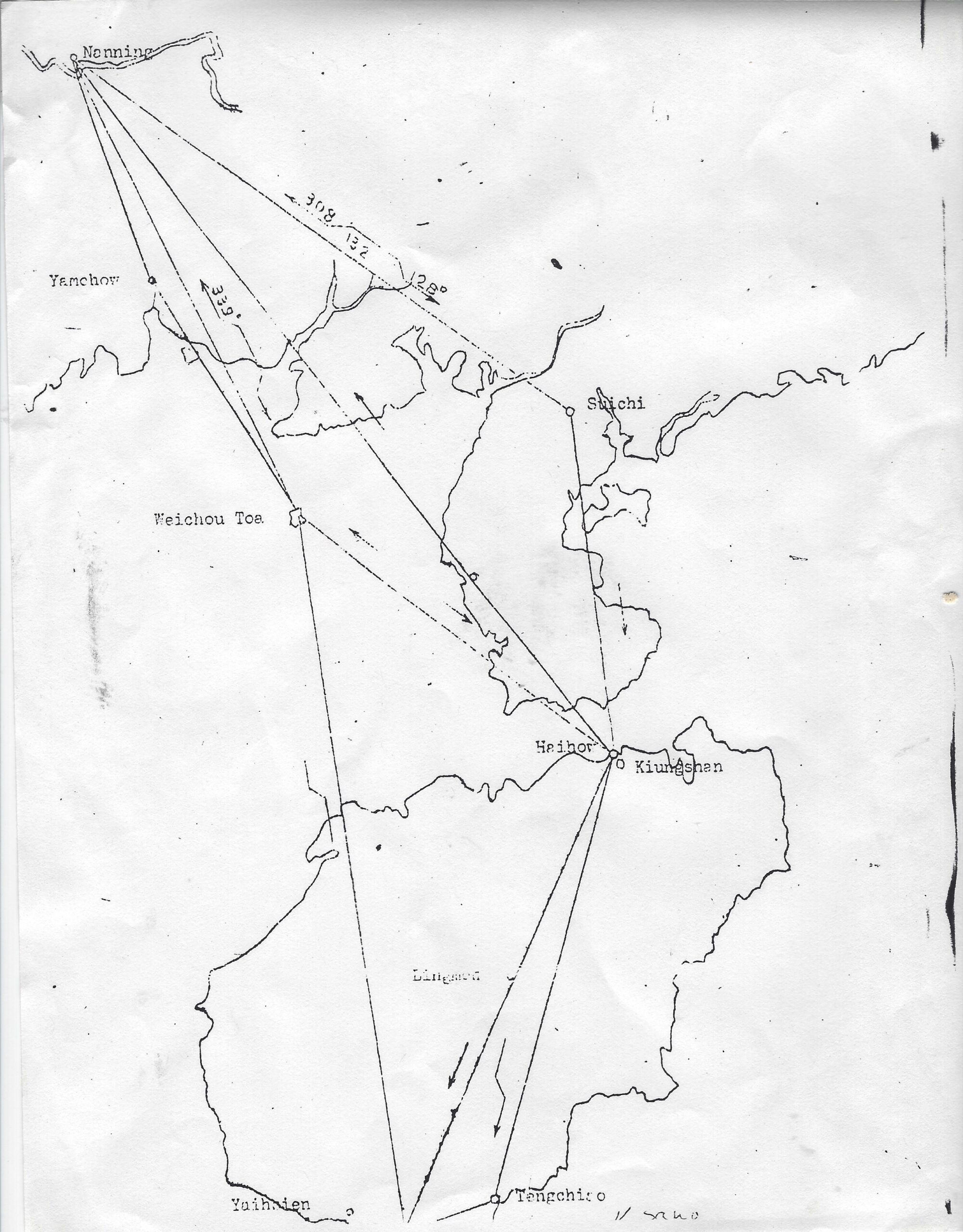
Sketch of capture map fragment
A map found in one of the crashed Zeros after the raid suggested that attackers assembled at Hoihow and then took a direct route to Nanning with alternatives for either of two indirect routes. Twenty-three Zeros from the training groups and nine from Air Group 254 were involved. The training group Zeros each carried two 60kg bombs filed with dozens of small bomblets.
A Japanese news reports described the attack as follows:
An Imperial Navy air unit at dawn April 5th staged a surprise raid on the enemy airfield in Nanning, south Kwangsi province setting ablaze two B-25s and three P-40s aground while heavily damaging enemy military installations. A conflagration was started at one point. During fierce dogfights with enemy fighters which came up to intercept, our raiders shot down seven P-40s. Three of our airplanes crashed into enemy objectives…Reports coming in later have confirmed the shooting down of two additional P-40s making a total fourteen enemy planes shot down or damaged in the course of the raid…on April 5th…on Nanning.
A Fourteenth Air Force intelligence report provided a different version:
On the afternoon of 5 April, 32 Japanese planes attacked Nanning in two waves. The first wave dive bombed the auxiliary strip from 3,000 feet causing no damage. The second wave strafed the entire area, destroyed one Shark, inflicting minor damage to another and thoroughly strafed a B-25 off the end of the runway with little damage. Sharks made contact with the following results: nine destroyed, three probables and three damage.
Twelve P-40s of the 26th FS were based at Nanning. The day started with an alert resulting in seven P-40s scrambling at 0835 to check a plot of eight approaching bogies. No contact was made. This may have been a preliminary Japanese gambit that went awry, or a feint intended to lessen the American sense of urgency in responding to the later attack.
The attack force of twenty-three Zero fighter-bombers and their Air Group 254 escort of nine Zeros approached Nanning in early afternoon. Prior to reaching Nanning the escorts became separated from the fighter bombers due to cloudy conditions. The same cloudy conditions allowed intercepting radar directed P-40s to take the unescorted fighter bombers by surprise in diving attacks.
Additional air combat details are provided by another Fourteenth Air Force report in which most of the attackers were identified as Oscars:
Sharks made contact over the field with the following results: 9 confirmed destroyed, 3 probables and 3 damaged. Chinese net on the following day confirmed 9 aircraft down in the immediate vicinity. Ground gunners claimed hits on 5 Zeros. Zeros remained in the field area for one hour, making numerous strafing passes when not engaged by Sharks. Pilots claim some of the attacking Zeros were Tojos. Two wrecks recovered were found to be Navy Zeros. An early report states that one P-40 pilot was killed in a head on collision with a Zero…Friendly aircraft destroyed: 2. Friendly aircraft damaged: 1.
For the 26th FS 1Lt. Lyndon Marshall was credited with four victories and 2Lt. Allan Putnam claimed two victims. Another was credited to 2Lt. Sam L. Brown who was only 26th FS pilot killed in the combat. The Japanese fighter bomber groups lost seven pilots (five from Sanyo and two from Haikou) including Lt. (j.g.) Nakahara. The Japanese news report of just three losses may be the result of the officially approved account reporting only jibaku (seen to crash) losses but not those failed to return without being seen to crash. Chief Petty Officer Mitsu-o Hori a combat experienced pilot with Sanyo Air Group claimed one P-40. His Zero was damaged but he made it back to Hainan for an emergency landing. His might have been one of the two later reported claims. Air Group 254 suffered no pilot losses and apparently little other damage.
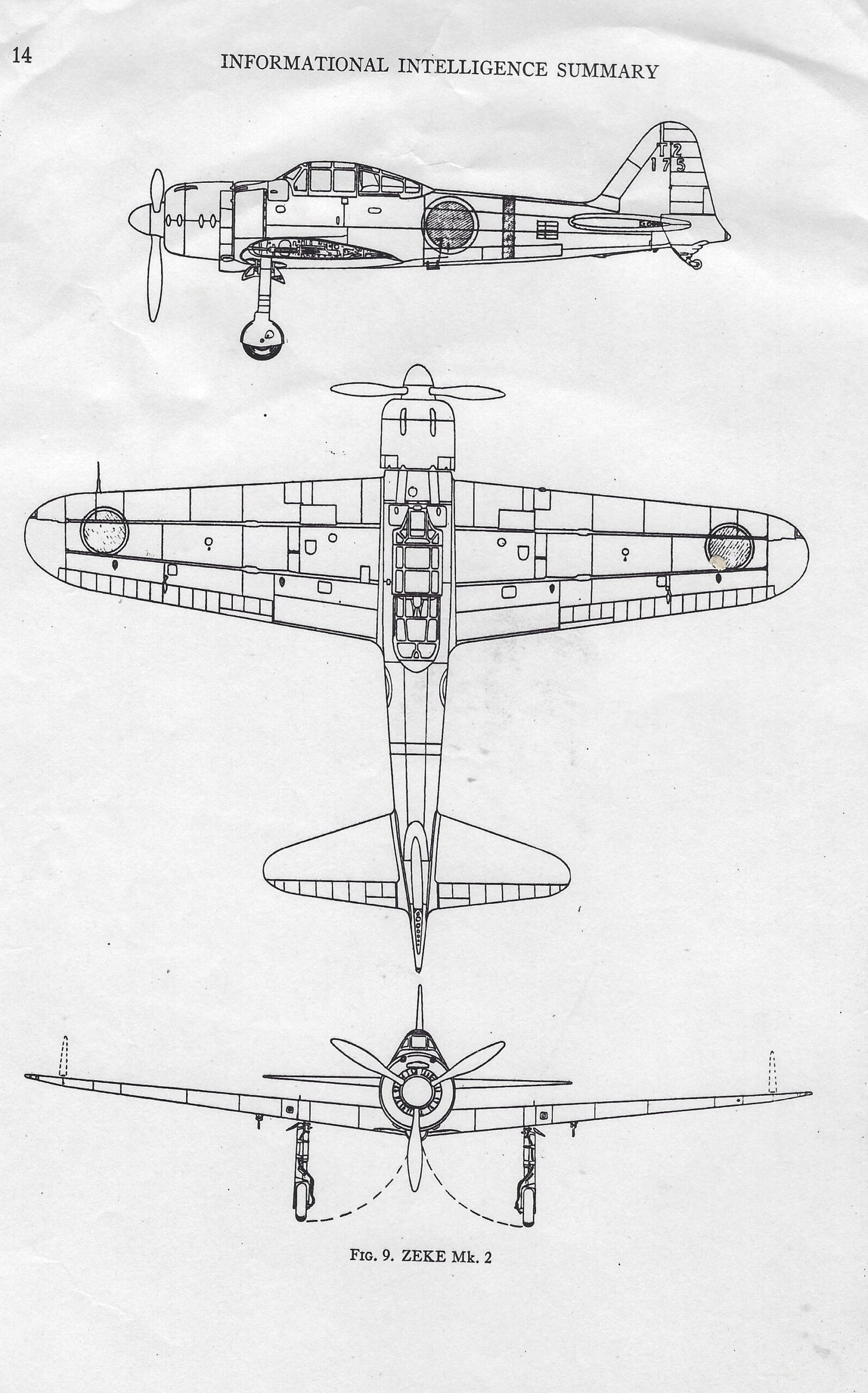
Zero 21 schematic showing bomb attachment points and folding wingtips
Nanning may have been a little nervous the following day. Fighters were scrambled based on radar plots that resulted in no contact or were friendly. The wrecked Zeros inspected after the attack proved to be Zero model 21’s fitted with underwing bomb racks. The unwelcome results of this action dampened the Japanese command’s interest in undertaking additional offensive adventures. Air Group 254 was fortunate to suffer no pilot losses. That good fortune did not survive the following week.
On April 6th B-25s over Bakli Bay clashed with Zeros which each side claiming damage but no losses. A similar clash occurred the following day over the Tonkin Gulf. On the 8th six B-25s flew to southern Hainan. They were intercepted by “10 Zekes &/or Oscars” and jettisoned their bombs but in subsequent combat claimed two Zeros shot down also losing two bombers and a third damaged. One Zero went down. Their victim was Lt. Maeda 254’s senior flight officer. The following day B-25s operating off Hainan Island reported being attacked by seven Tojos. They claimed four Tojos destroyed and three damaged. Two B-25s were damaged but returned to base. Their sole victim was Petty Officer Isao Tahara of Sanya Air Group probably attached to 254 for operations.
Air Group 254’s status report for 15 April showed it had twenty-three Zeros on hand, of which nineteen were operational. Four Zeros had been expended during the month.
The flurry of activity around Hainan Island soon subsided. In mid-April the Japanese launched their Ichi-Go ground offensive. This involved a plan to establish an overland rail route from north China to southern China expediting shipment of supplies from the southern resource area to the Yellow Sea coast and ultimately to Japan. Their direction of advance also put them in a position to overrun Fourteenth Air Force bases along the way. This drew the attention of the Fourteenth Air Force to operations to oppose this advance. The Japanese offensive resulted in the capture of Nanning in November 1944.
Air Group 254 and its Zeros continued operations from Hainan Island and over nearby mainland China for several months. The group reported no losses in May or June and only one in July. In October U.S. carrier aircraft attacked Formosa as a prelude to the invasion of the Philippines. The group transferred to Formosa and subsequently was involved in the Philippines campaign. Air Group 254 was deactivated in January 1945.