
The Arrival of the Type 1 Fighter in the Southeast Area
The Japanese Army Air Force Type 1 fighter (Ki 43) arrived in New Guinea in December 1942 as part of the JAAF’s contribution to help bolster air power in the Japanese Southeast Area comprised of New Guinea and the Solomons. Following the first Hayabusa unit 11th Hiko Sentai (Fighter Regiment, FR), a similarly equipped unit, 1st FR, arrived in January 1943. In late 1942 and early 1943 several Japanese fighter regiments were equipped with the model II of the Type 1 fighter, but that version would not appear in New Guinea until six months after the first model I Hayabusas arrived.
Development of the Ki-43 Model II (“Oscar II”)
Large scale production of the original version of the Type 1 fighter ended in December 1942 when thirty-two were produced, followed by a few more in 1943. Seventy-five model II versions were produced in 1942 of which more than half (47) left the factory in December of that year. Main differences between the two versions are noted in the figure below, the first page of a twenty page translation of a Japanese “Airplane Mechanics Instruction Guide (Type 1 Fighter Plane Model 2)”, October 1943.
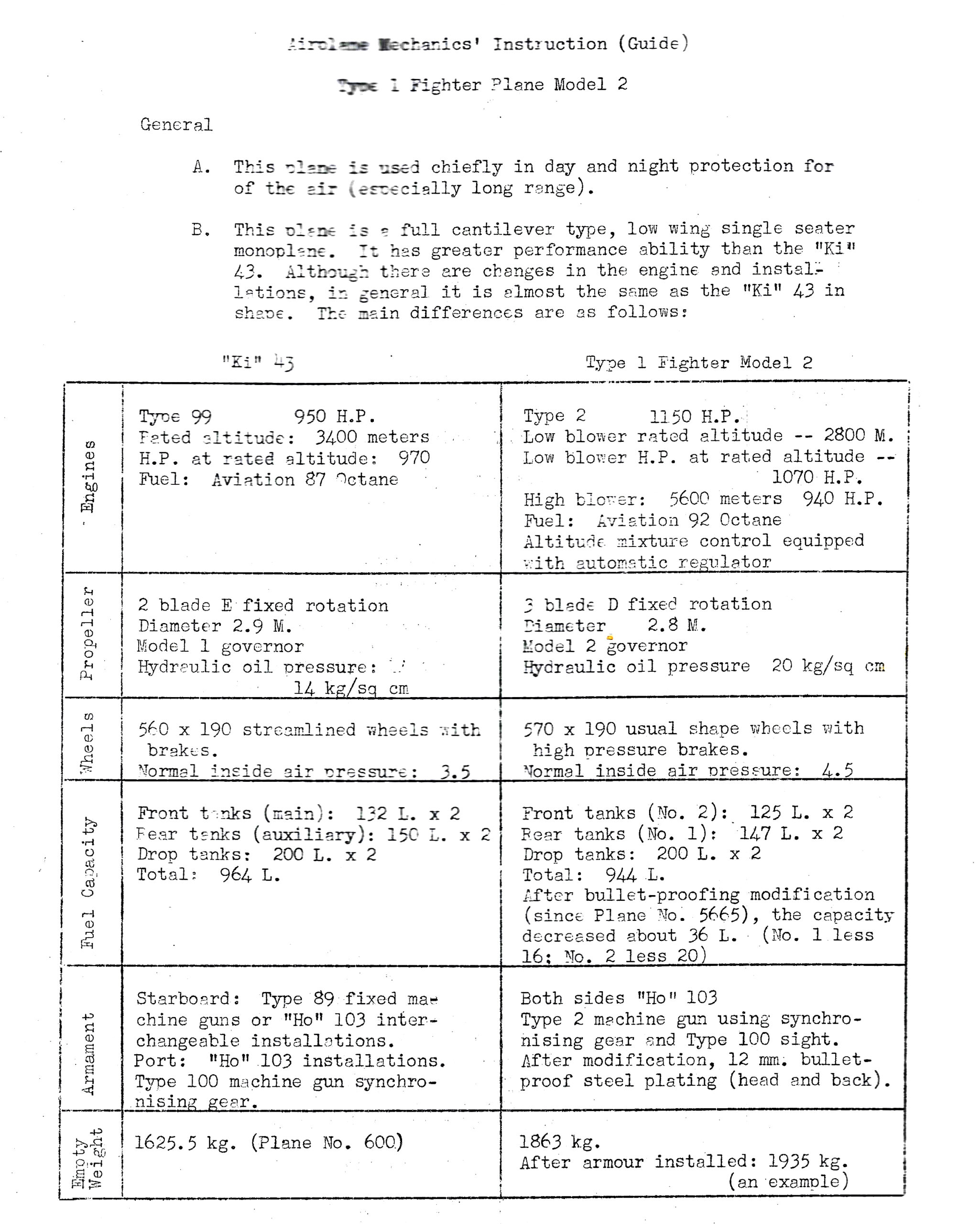
Mechanics Guide T. 1 fighter
The 24th Fighter Regiment Converts to the New Aircraft
In December 1942 the 64th FR became the first operational unit to receive the Type 1 fighter Model II. By February 1943 other units began flying the model II version. Among these was the 24th FR then stationed at Palembang, Sumatra. The 24th had seen active service earlier in the Pacific War in the Philippines and in southern China. In Sumatra 24 FR was able to convert to the new version under relatively peaceful conditions. In April the 24th received orders to transfer to the Southeast Area where the JAAF was engaged in a buildup of its forces. The transfer involved a move eastward across the Netherlands East Indies to western New Guinea (present day Indonesia). Recently improved airfields at Babo and Hollandia provided rest and refueling stops before reaching the Japanese airfield complex at Wewak.
The command line-up for the re-equipped unit included forty year old LtCol. Hachio Yokoyama Sentaicho (commanding officer) and squadron commanders (chutaicho) 1Lt. Tadashi Koga, 1Lt. Masashi Yanagizawa (acting), and 1Lt. Shigeo Uehara. Among their veteran pilots was Sgt. Maj. Katsuaki Kira who had claimed nine victories over Nomonhan. Some of their aircraft had upper surfaces camouflaged green others were left in natural metal overall. They sported the 24 FR tail marking: its color depending on chutai assignment. Early production model II fighters lacked armor protecting the pilot. Though covered with fabric and a thin layer of rubber, their fuel tanks were vulnerable to .50 caliber fire. Armor and improved tank protection were added to aircraft produced after July 1943.
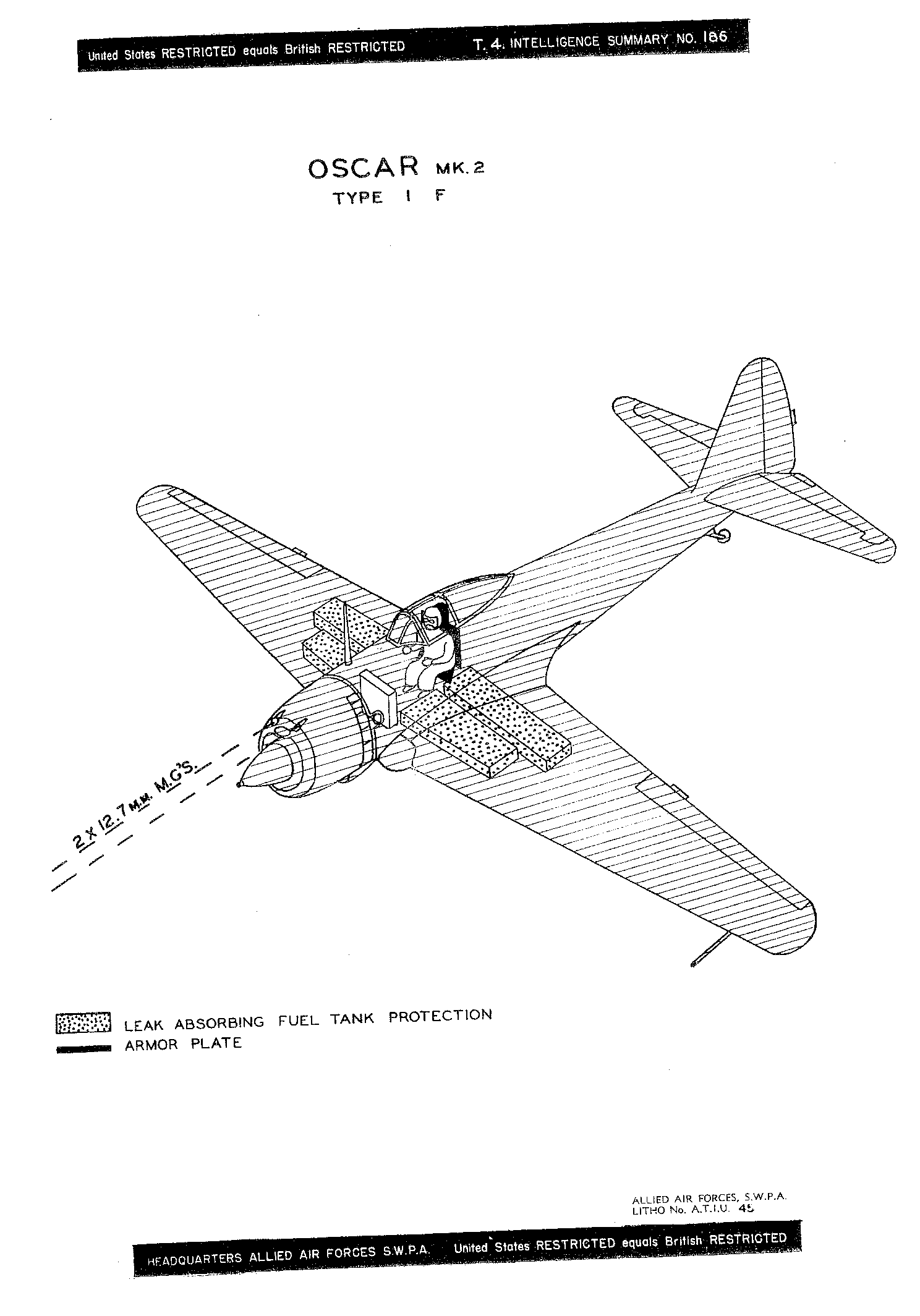
Late production T.1 , mod. 2 fighter
Building the Japanese Airfield Network at Wewak
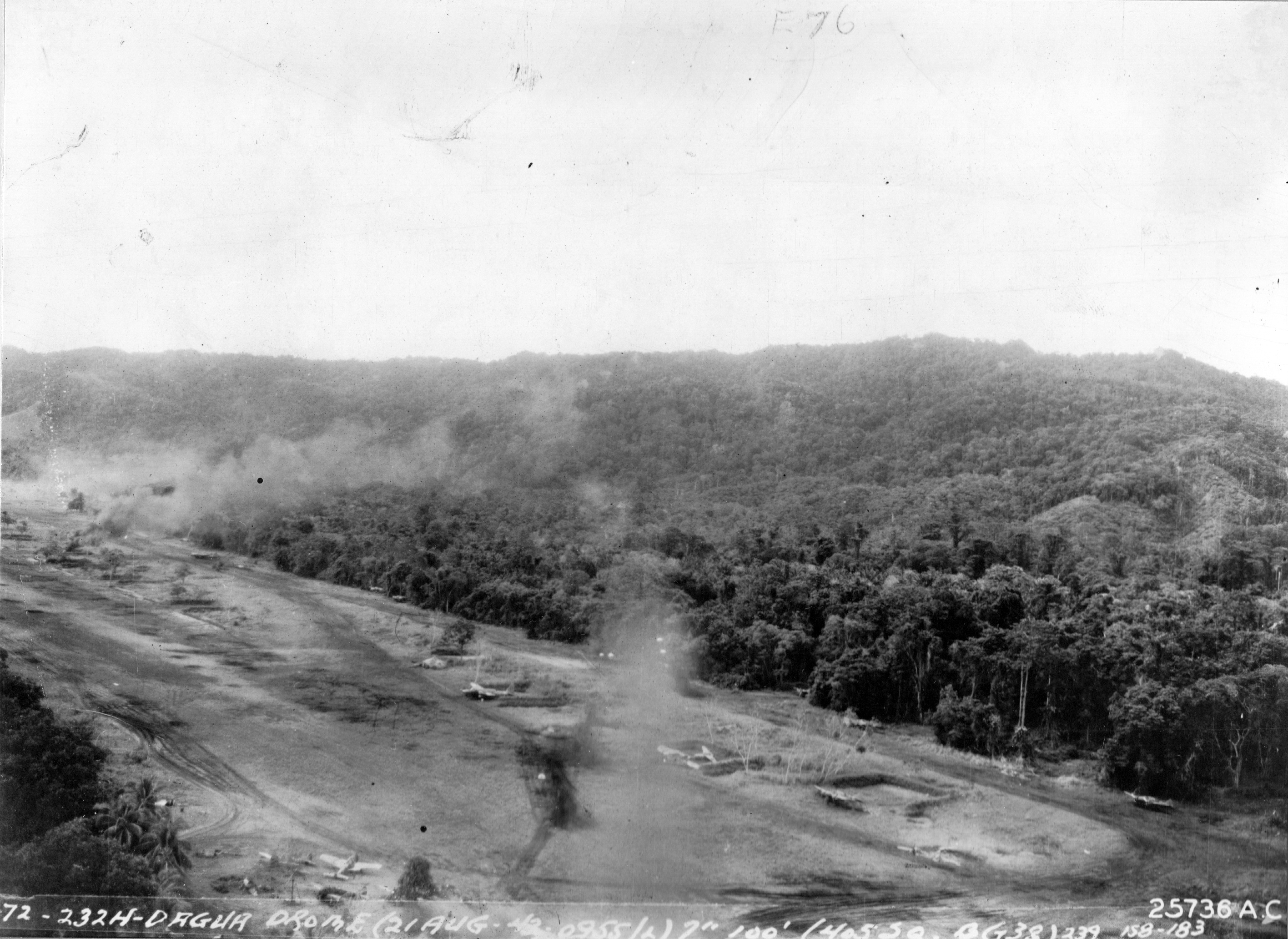
The Japanese (initially the Navy) had used the pre-war Wewak airfield at Wirui episodically since January 1943. By March Allied photo reconnaissance noted significant airfield development along New Guinea’s north coast. In addition to Wewak, aircraft were seen at newly built Boram. Wewak became the JAAF Wewak-Central and Boram, Wewak-East. In addition, more than thirty miles west of Wewak airfield development was detected at But. Later airfield development was spotted at Dagua 22 miles west of Wewak. But (Butsu apparently pronounced ‘boot’ by locals and the Japanese) became But-West while Dagua was But-East. By 28 April the pre-war mission landing strip at Dagua had been extended in length and basic requirements of a military airfield including dispersal lanes, hard standings and revetments had been added. It was considered ready for use and would become the home base of 24 FR and its model II, Type 1 fighters. Exact dates of the movement from Palembang to But-East are elusive but Allied reports provide helpful insights.
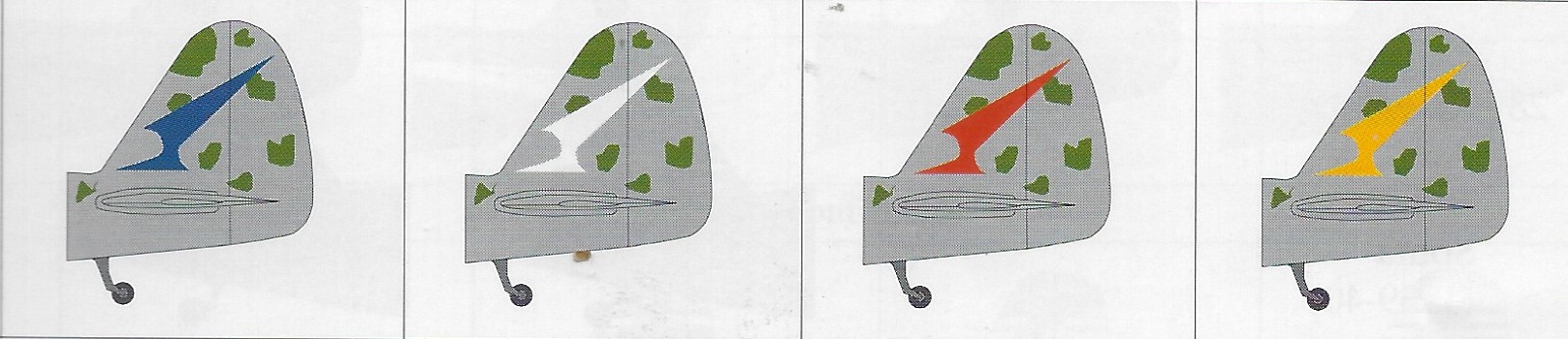
HQ and chutai colors
First Combat Encounters Over New Guinea
The first wave of 24th FR fighters reached Babo on or before 4 May. On that day six B-24Ds of the 319th Bomb Squadron from Darwin raided Babo. They reported twenty fighters (not all necessarily from the 24th) and two bombers on the field. The bombers were probably cargo planes or bombers used to transport ground staff. Photos taken during the raid showed one fighter destroyed by bombs. Bomber crews also reported four other fighters on the field appeared to be unserviceable. Fighters of the 24th scrambled. Sgt. Maj. Mitsu Ogura returned after a length chase claiming to have destroyed two bombers and damaged one. None of the Liberators was lost but Ogura’s attacks may have disorganized the formation. Two of the B-24s were intercepted over the Kai Islands by Japanese Navy Type 2 seaplane fighters of Air Group 934. B-24 gunners claimed one attacker. One Rufe was hit by return fire. All aircraft returned to their bases with only minor damage.
Following a raid on the sixth, five RAAF Catalinas attacked Babo on the night of 9/10 May. In addition to several large and medium sized aircraft sighted, sixteen fighters were reportedly observed. The Catalinas claimed heavy damage including three fighters destroyed. By this time some of the Type 1 fighters of the 24th had moved farther east leaving only the 1st Chutai (squadron) temporarily at Babo. No fighters were observed at Dagua until the middle month. It seems possible the Type 1 fighters of the 24th initially stopped at Wewak before taking up residence at Dagua where Allied reconnaissance first observed aircraft on 15 May. In the Wewak area the 24th came under the command of the 6th Flying Division at Rabaul and the local Flying Brigade.
Operations Around Lae and Wau (May 1943)
On 14 May four fighters of the 24th landed at Lae airfield. They apparently escorted Type 99 army reconnaissance planes (attack bombers) of the 83rd Independent Chutai (Fc). In addition, they probably assessed airfield conditions in advance of operations that were to take place the following day. Early the following morning Australian spotters on hills overlooking Lae sighted numerous aircraft at the airfield. Reconnaissance over Australian positions and air attacks soon took place. The JAAF planned a series of raids. The air command at Rabaul sent an attack against Wau, a key base for Allied operations in the area, by heavy bombers and their escorting fighters. Three attacks would be mounted under the command of the flying brigade at Wewak. First was an attack on Australian tactical positions by nine attack planes (Type 99 army reconnaissance planes) escorted by sixteen fighters of the 24th. This attack was repeated in the afternoon. At mid-morning another attack against Bobdubi was intended to consist of thirty light bombers of the 208th and 45th FRs escorted by twenty-one fighters. In fact, somewhat fewer aircraft took part and the 208th FR, unable to find its intended target, bombed an alternative target. This turned out to be a Japanese position and many of their ground comrades were killed. By late afternoon Australian observers sighted as many as thirty-five Japanese planes at Lae before they took off for home bases. None of the attack missions were intercepted by Allied fighters. The same was true for missions carried out over the following several days.
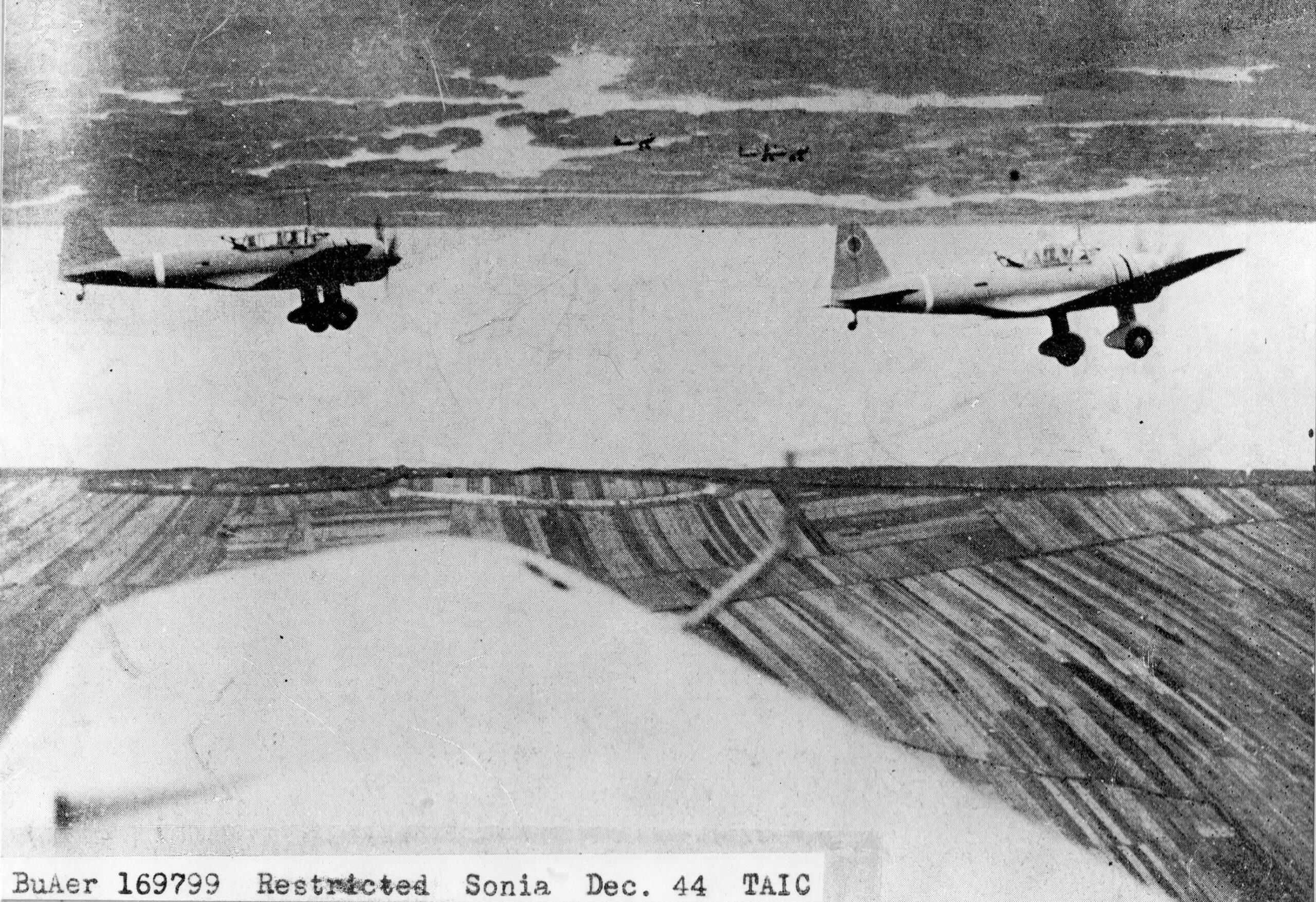
T.99 (Ki 51) army recon planes
At least a few fighters from the 24th operated from Lae on each day from May 16 to 19. On the 18th seven landed there. On May 19 several fighters from the 24th stood by at Madang airfield to provide escort to the plane flying the Japanese 18th Army commander to Lae from where he would proceed to Salamaua on a staff visit. Five fighters scrambled to intercept a reconnaissance B-24 flying in the vicinity of Madang. B-24D No. 41-24269 piloted by 1Lt. Donald Almond of the 400th Bomb Squadron (BS) radioed Port Moresby at 0910: “Attacked by five Zekes.” At 0921 this was followed by “SOS – going down.” The Liberator was lost with its entire crew. The 24th lost Sgt. Hikoto Sato. Sato reportedly rammed the B-24. This was just ten days after an 11th FR pilot had rammed a B-17 and been lionized in Japanese news accounts. This was one of a string of encounters between the Hayabusas of the 24th and Liberators of the 90th Bomb Group during May.
The Allies were developing a route from the Gulf of Papua up the difficult Lakekamu River to Bulldog from which a very rough trail led to Wau (Bulldog Track). If the trail could be developed to a jeep road and then a truck road Wau’s dependence on aerial supply could be reduced or eliminated. On the twentieth nine 208th FR light bombers escorted by twenty fighters of the 24th FR were detailed to attack shipping on the Lakekamu River. The crew of a reconnaissance plane also involved in the mission filed this report:
Results of today’s attack (one squadron of 208 FR) and 17 airplanes of 24 FR: direct hit on one ship, two Consolidated damaged but did not crash.
Allied reports state a landing craft was attacked but not damaged. The two Consolidated B-24s encountered were on a search mission for the B-24 that failed to return the previous day. The 400th BS B-24Ds flown by Capt. Dale Thornhill and 1Lt. Porter were damaged. One was out of action for a week. They reported being attacked by nine Zekes claiming two were destroyed and one probably destroyed. There is no record of any Japanese loss.
The cryptic translated summary of the 24th Sentai battle report for May 21st was “Attack and reconnaissance of airfield.” The airfield was Wau and fighter combat resulted. The Japanese reported encountering thirty-one Allied aircraft including bombers and transports as well as fighters; nine P-39s showed up near the end of the combat. However with one exception combat took place between twenty-one Japanese fighters and eleven P-38s of the 80th Fighter Squadron.
The P-38 mission report states they were at 23,000 feet below a broken overcast when twenty “Haps, Zekes and Oscars were sighted.” Transports were ordered to turn back. The P-38 report: “Enemy appeared to be hiding from the P-38’s and waiting for an opportunity to attack. Enemy made attack first from inside of the P-38’s turn from slightly above. The enemy pilots appeared experienced, showed skill and coordination.” Despite this the Lightning pilots claimed six kills, five probables and two damaged. Four P-38s were hit. Damage was considered minor although Capt. Edward Cragg landed on one engine. Authors Stanaway and Hickey in an 8th Fighter Group history (Attack and Conquer, Schiffer, 1995) state “The records available from the Japanese do not support the claims made…”
According to a Japanese intelligence report three P-38s were claimed including one as uncertain (probable). In addition to the four 80th Squadron Lightnings suffering damage one Lightning was shot down. This was an 8th Photo Squadron F-4 reconnaissance version flown by 2Lt. Donald Blackard who failed to return. His planned mission profile placed him at 23,000 feet in the location and at the time of the combat. Months later the wreckage of F-4 No. 41-2177 and Blackard’s remains were found in the area.
Combat Claims and the Gun Camera Problem
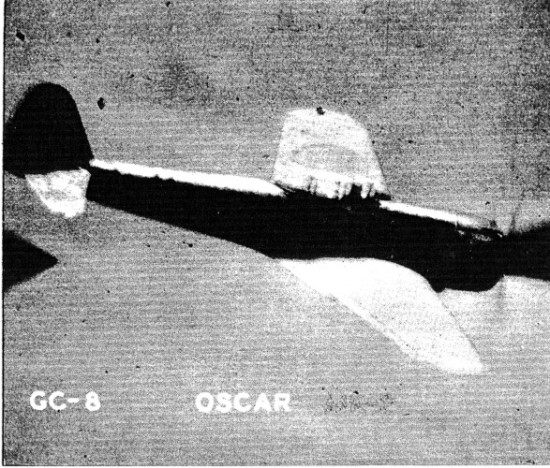
Some readers might ask, how can American claims be so far off. Weren’t there claims standards, and need for verification such as gun camera evidence? There were no binding standards beyond the local command, and these were not always followed. As for gun cameras, below are some comments on the six kills in the mission’s “Photo interpretation report” signed by intelligence officer Capt. Ronald Malloch.
Capt. Cragg (two kills), “Strip is badly blurred due to vibration of guns. The first E/A destroyed by Captain Cragg, shows as a blur spinning across the top of approximately 15 frames…” Capt. Tomkins, “Strip is badly blurred due to vibration of guns. The E/A appears in approximately four frames only and does not show at all clearly.” Lt. Smith, “E/A appears in approximately 4 frames and at too great a distance to show very much.” Lt. Dean, (two kills) First E/A appears in approximately 45 frames and at too great a distance to show information of value. The second E/A appears in approximately 12 frames and is badly blurred and from a distance.”
Gun camera view
Veteran Pilots of the 24th Sentai
Two days later Sgt. Maj. Katsuaki Kira was preparing to land at Madang on a liaison mission when he was alerted to enemy aircraft in the area. Three B-24s were engaged in a reconnaissance mission. Kira climbed rapidly to their altitude of 9,000 feet. In a lengthy engagement the Americans reported one Zeke made eight firing passes from the frontal quarter some pressed to fifty yards. Kira claimed one certain kill, one uncertain and the third damaged. Though suffering damage all the Liberators returned to base. Kira was a long time veteran with 24 Sentai having claimed his first victory, a Russian I-16, over Nomonhan in 1939. He served in the Philippines at the outbreak of the Pacific War. Later he spent several months in southern China before the 24th FR became responsible for air defense of the oil installations at Palembang, Sumatra in late 1942 and early 1943. He claimed seven victories with 24 FR in New Guinea up to October 1943. Along with earlier and later successes he was eventually credited with twenty-one victories. Kira survived the war and served in the Japanese Self-Defense Air Force post-war.
On 26 May both sides launched attacks on their opponent’s bases. The next encounter between a pilot of 24 FR and Liberators came on that day. Japanese authors identify the pilot as Sgt. Maj. Naoji Menya. Translations of Japanese wartime documents give his name as Omotani. From a translated Japanese intelligence report:
On the 26th, Omotani SOCHO of HIKO 24th RENTAI engaged five B-24s in aerial combat over BENA BENA (200 km NW of Lae) and shot down 2 of them. Also S of Madang and in the vicinity of LONG Island, he shot down 2 enemy planes that were fleeing to the north.
Menya (Omotani) was apparently alone after escorting an attack mission when the encounters took place. An Allied intelligence report commenting on attacks by B-24s and B-25s on Madang stated:
Liberators returning from the first attack, 26 May, were twice intercepted by one enemy SSF Oscar. One Oscar was believed damaged.
No B-24s were shot down but this incident is probably related to a report of two B-24s returning to base crippled including one with an engine shot out.
Operational Strength of Japanese Fighter Units
For 24 FR May ended with the unit providing cover for a Wewak convoy during which no combat took place. For the JAAF air operation in May results reported in Japanese Monograph No. 32 for all units were: In ten offensive fighter missions, 208 sorties flown; 7 enemy aircraft shot down; two own failed to return. In air defense of convoys and land positions, 845 sorties flown, 5 enemy aircraft shot down, three own shot down or failed to return and five damaged.
Status of the 24th FR at the end of May included forty fighters on hand, twenty-four serviceable. Thirty-two pilots were available. Other fighter units had – 1st FR thirty-eight Type 1, model I fighters serviceable. Soon to be relieved 11th FR had twenty-four Type 1, model I fighters serviceable. The 13th FR had ten twin-engine fighters in operation. The 68th FR had eighteen Type 3 fighters in serviceable condition.
Fighting Over the New Guinea Highlands
On June 2nd Hayabusas of the 24th escorted two chutais of the 208th FR in mission to interfere with construction on the Bulldog track which also resulted in an attack on the Bulldog airstrip when aircraft were sighted there. There was no interception. The light bombers encountered lively AA, .50 caliber and 40mm fire, from a detachment of the Australian 156th Light AA Battery. One bomber blew up over the airstrip. Some bombs hit the runway. The field was out of action for several hours. The Japanese claimed three medium airplanes were damaged. Various Allied reports admit one C-47 was damaged by strafing but differ as to whether the damage was serious. A camp for native workers was hit. The Japanese were correct in claiming the attack was a success. Casualties were inflicted on a few native workers. More than five hundred abandoned their work on the Bulldog Road and installations. Moreover, workers and local tribesmen took tools and other implements with them when they left and looted supplies and provisions.
Four days later twenty Type 1 fighters of the 24th escorted four army reconnaissance planes of the 83rd Fc in an attack on Wau. The fixed landing gear Sonias were unsurprisingly reported as Vals, Navy Type 99 dive bombers. Allied intelligence officers eventually figured it out. The fighters were identified as Haps. The attack caused minor damage. One Australian army cooperation Wirraway was punctured with bullet hits. Some holes were punched in the airstrip. Other facilities on the field were lightly damaged.
Early in June the Japanese continued to carry out attacks in the New Guinea highlands where Allied airfield development seemed a threat to them. The Allies never expected to launch significant aerial operations from the various landing grounds there. The airfields helped to supply Australian ground troops that harassed the Japanese southern flank. The 24th FR often supported operations over the southern highlands typically without encountering opposition in the air. Their airfield at Dagua also came under attack on occasion, for example by three B-24s in the early morning darkness of June fourth. Damage to the strip may been a hazard possibly the cause of the accidental death of a pilot on June tenth.
For several days the U.S. Fifth Fighter Command had been sending flights of P-38s from Port Moresby to cover cargo plane flights to airfields in the Bena Bena region of the New Guinea highlands or to counter Japanese aerial reconnaissance in the area. On June 11th one flight resulted in ace Capt. Thomas Lynch shooting down a reconnaissance plane of the 74th Fc.
On the following day 24 FR mounted a fighter sweep over the highlands. On the U.S. side cargo planes were to be escorted by P-38s of the 9th Fighter Squadron among whose pilots was ace Capt. Richard Bong. Things did not go smoothly refueling at Port Moresby. The C-47s proceeded on time leaving their escort forty minutes behind. Nine Lightnings made it to the highlands. They sought to provide cover for the transports which were out of sight presumably on the ground unloading their cargo. At that point eight Hayabusas of the 24th showed up. The three Lightnings of Blue Flight climbed into the approaching Japanese fighters. 2Lt. Clayton Barnes fired on an Oscar that fell away toward the clouds. Later he fired on another fighter that fell away into a spin. The other Lightning flights joined the melee. Bong was among the other pilots that engaged firing head-on in his initial pass against five fighters and then firing on another one which he reported took two 20mm hits. Bong’s Lightning received hits and he exited the area. He landed on a flat tire, hydraulics knocked out, and bullet holes his Lightning’s tail boom and both wings. Bong and Barnes were each credited with one sure victory and one probable. Neither of the claimed victories was seen to crash. The 24th FR mission report claimed four Lockheed P-38s. Two of its fighters were slightly damaged. Sgt. Maj. Ogura who fought B-24s over Babo early in May, was wounded and spent a month in hospital. Ogura survived the war.
Air Battles Over Salamaua
On 21 June eight bombers of the 208th FR were detailed to support ground troops on the Salamaua front. They were escorted by twenty-eight fighters. The 24th FR led by Sentaicho LtCol. Yokoyama being joined by six model 1 Hayabusas of the 1st FR captained by Capt. Yoshitaka Sawayama. Headed to the same region were B-25s on a supply dropping mission escorted by fourteen P-38s of the 80th FS. Both U.S. and Japanese fighters were somewhat spread out in individual flights rather than in compact formations.
Alerted by ground radar the P-38s turned toward the reported plot. Only two Lighting pilots encountered the bombers. They made brief passes, doing them no harm. The bombers hit Australians positions at Guadalgasal and Mat Mat Hill causing casualties and exploding an ammunition dump. Most of the Lightnings intercepted the main Japanese formation over Salamaua. According to the squadron mission report, two P-38s led by Capt. George Welch hero of the first interception of Pacific War at Pearl Harbor:
Spotted five Zekes over Salamaua at 5,000 feet. After making one attack resulting in one probable destruction, this flight lost sight of the enemy [due to Welch having a drop tank problem] and flew to Lae. At Lae eight Zekes were…over the field at 10,000 feet. Our aircraft attacked from above, making several passes. Each pilot claimed two Zekes definitely destroyed.
2Lt. Cornelius Smith claimed his first three victims among the 80th squadron’s thirteen victories. No P-38s were lost. Japanese claims possibly resulted from P-38s disappearing into clouds while under attack. Several P-38s evaded attacks using cloud cover. The 24th FR lost Warrant Officer Menya who a month earlier had claimed four B-24s in a day. Another of their planes was seriously damaged. 2Lt. Matsutoshi Masuzawa of the 1st FR landed his damaged fighter at Lae despite suffering from multiple serious wounds. This veteran pilot survived the war.
Declining Aircraft Strength in the New Guinea Campaign
In the closing days of June, the 24th was subordinated to the 12th Flying Brigade (Hiko Dan) and assigned convoy escort duty for a convoy to Hansa Bay. At the end of the month the unit’s aircraft strength had fallen to nearly half of the previous month. Of twenty-one fighters only seven were fully operational. A few days later they were able to put more than double that number into action. In contrast, pilot strength had only fallen from thirty-two to thirty reflecting one pilot loss in combat and one to accident. Serviceability rates between 25 and 50% were common among JAAF units in New Guinea. Operational wear and tear, incremental air combat and bomb damage plus accidents are the likely explanation for declining aircraft strength.
A33118 Dagua
The Oscar II Becomes Established in New Guinea
On 30 June the Allies opened their major counter offensive in the South Pacific and Southwest Pacific theaters. In New Guinea this included a landing by American troops at Nassau Bay on the coast southeast of Salamaua. In the first week of July the 24th FR escorted bombers to the area as well as on missions to the New Guinea highlands. On the afternoon of 3 July, the Japanese launched an attack force of ten light bombers and four army reconnaissance planes escorted by a dozen fighters of the 24th FR against Nassau Bay. The number of fighters was slim for the number of attackers. Moreover, the light bombers and reconnaissance bombers separated. Fourteen P-40Ks of the 7th Fighter Squadron were escorting C-47s dropping supplies to Australians at Mubo when bomb bursts were noted along the shoreline to the north. P-40 pilots reported encountering eight light bombers. Some reports indicate nine fighters were with the bombers, but they were not in compact formation. In the initial attack against the bombers only two fighters were seen in close escort position. Other fighters joined the fray at 5,000 feet. 2Lt. Elliot Dent shot at an Oscar and reported seeing the pilot bail out. 2Lt. George McMurray avoided the escorting fighters and made two passes at a straggling bomber. He saw the bomber’s right engine burst into flames and noted that it crashed 100 yards offshore. When the fight was over all the P-40s returned to base. They were credited with five fighters, and a bomber (Dinah) destroyed plus two fighters probably destroyed. One Type 99 light bomber was shot down with two of the crewmen parachuting to safety. A Japanese report states that the fighter pilot shot down, 1Lt. Osato, made a forced landing rather than bailing out. Osato suffered a bullet wound to the leg. He was possibly the victim of 1Lt. Paul Slocum rather than Dent. The Japanese claimed two victories.
The mission of the 24th FR to the Salamaua front at mid-morning on 11 July was not connected with early morning bomb attacks by reconnaissance planes or a planned afternoon attack by heavy bombers from Rabaul. Its likely purpose was to interfere with Allied supply dropping or missions providing close support to ground troops. For that purpose, its timing was excellent, unfortunately there were three Allied missions all involving fighter escorts arriving in the area about the same time as the dozen or so Type 1 fighters of the 24th. P-38s of the 9th FS were escorting C-47s in the area and Lightnings of the 80th FS were nearby. Twelve Airacobras (P-39Ds and P-400s) were escorting B-25s. The action started with two “Hamps” attacking a B-25C of the 500th BS. The B-25 received numerous hits by explosive rounds but survived. Two Airacobras intervened to help. Four other Oscars bore down on C-47s but eight P-38s of the 9th FS cut them off before they could open fire. Dropping through the overcast the Japanese fighters were confronted by additional Airacobras. When the action was over the U.S. fighters claimed eight victories and a probable. One victory each for Lightning pilots from the 9th and 80th FS with the balance claimed by Airacobra pilots in the last major clash between Airacobras and Japanese fighters in the theater. The Airacobra pilots were of the opinion the Japanese pilots were inexperienced and had orders to concentrate on the bombers. One P-38 and one P-39 failed to return from the fight. Another reportedly crash landed at base. The 24th lost four pilots killed. 1Lt. Masashi Yanagizawa was chutaicho of the 2nd chutai. 1Lt. Eiichiro Takeuchi’s crashed fighter was found by the Allies a few days later. His remains were identified by his identification disc. 1Lt. Kinji Kuroda and W/O Suda were also lost.
On 24 July the 24th FR joined the Type 3 fighters of the 14th Flying Brigade in an attack on Bena Bena. Sgt. Takesuke Shibata was lost. Circumstances are unclear. There was no aerial opposition. By this time the 59th FR one of the first units to be equipped with the Type 1 fighter in 1941 had arrived in New Guinea. It was equipped with model II of the Type 1 fighter. The days of the 24th FR being the only Hiko Sentai flying the model II in New Guinea were over. This was timely as its operational strength had fallen to no more than ten aircraft. The 11th FR had returned to Japan, and the 1st FR would follow in August. The model I fighters they left behind were mainly used to provide replacement aircraft for the 13th FR when its stock of twin-engine fighters ran low and could not be quickly replaced. Thanks to the 24th and the newcomer 59th FR the Type 1 fighter, model II was a well-established fixture of Japanese air power in New Guinea.