
The Shift Toward Precision Warfare
Precision strike is often viewed as a modern development, but its foundations were laid during the Second World War. Faced with the limitations of conventional bombing—particularly against maneuvering warships—military planners and engineers developed guided weapons that could be controlled after release. These early systems, though imperfect, demonstrated capabilities that would not be fully realized for decades.
How amazing. You don’t have to burn down an entire city to cripple an enemy’s command, control and communications or disrupt industrial operations. Underground facilities and weapons stores can be hit with remotely controlled weapons. A nation’s navy can be disabled without risking aircrews confronting antiaircraft defenses.
The Challenge of Attacking Warships
Ballistic missiles, interceptors of ballistic missiles, cruise missiles, precision munitions, “drones” even so-called “kamikaze drones” among other stand-off and precision capabilities come to mind. Recent events have caused me to think about the origins of some of the capabilities recently in the news. At the dawn of the great cataclysm of the Second World War many challenges confronted the advocates of aviation as a weapon. One of these was how to use airplanes against maneuvering warships equipped with anti-aircraft weapons. High altitude bombing of maneuvering warships proved a difficult proposition. Torpedo attack and dive bombing brought attacking aircraft into proximity with anti-aircraft defenses which grew in effectiveness throughout the conflict.
Attempts at solving this problem resulted in various approaches. The Japanese adopted an approach to obtaining precision which few (though some) have followed. Background on their adoption of suicidal crash dives is discussed in the multipart article “Ten Days to Kamikaze” on this website. For the beginnings of remotely controlled weapons and precision strike we need to turn elsewhere. Hopefully this review of early operations of remotely controlled stand-off weapons will be of interest.
The Hs 293 and the Birth of Guided Bombs
The idea behind a remotely controlled air-launched bomb began prior to World War two not in a government laboratory or with a military specification but at a private company. Interestingly, today many innovations with military as well as civil applications begin as private ventures. After the war began the idea gained German Air Force (Luftwaffe) support. The first successful test flight of the Hs 293 “glider bomb” took place in December 1940. In physical appearance it looked like a small airplane with an appendage (the rocket motor) hanging beneath.
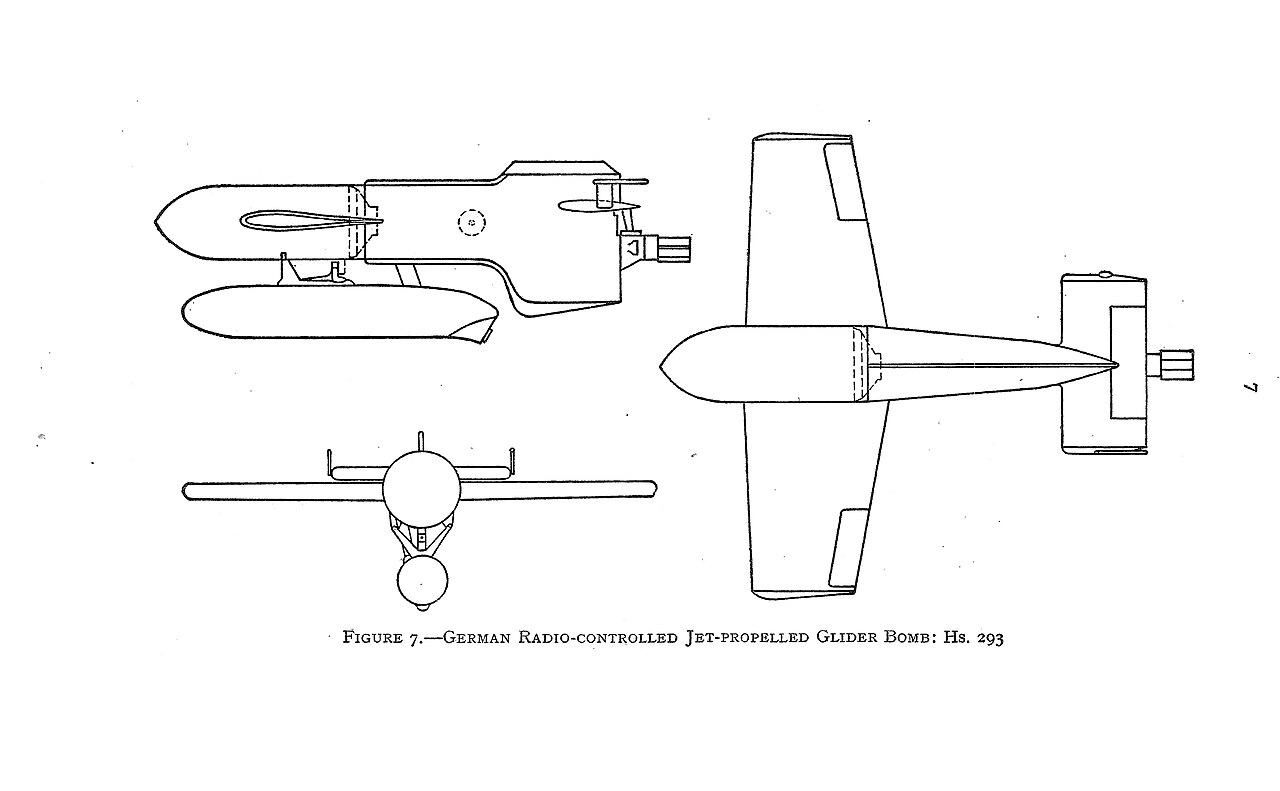
HS 293
Hs 293 was 12 feet long with a ten foot wingspan. Its warhead was about 650 pounds. Its rocket engine fired for about ten seconds driving it to a speed in excess of 500 m.p.h. before it entered its unpowered glide mode. The observer in the launching aircraft guided it with radio control via a joystick and a Lofte telescopic bomb sight.
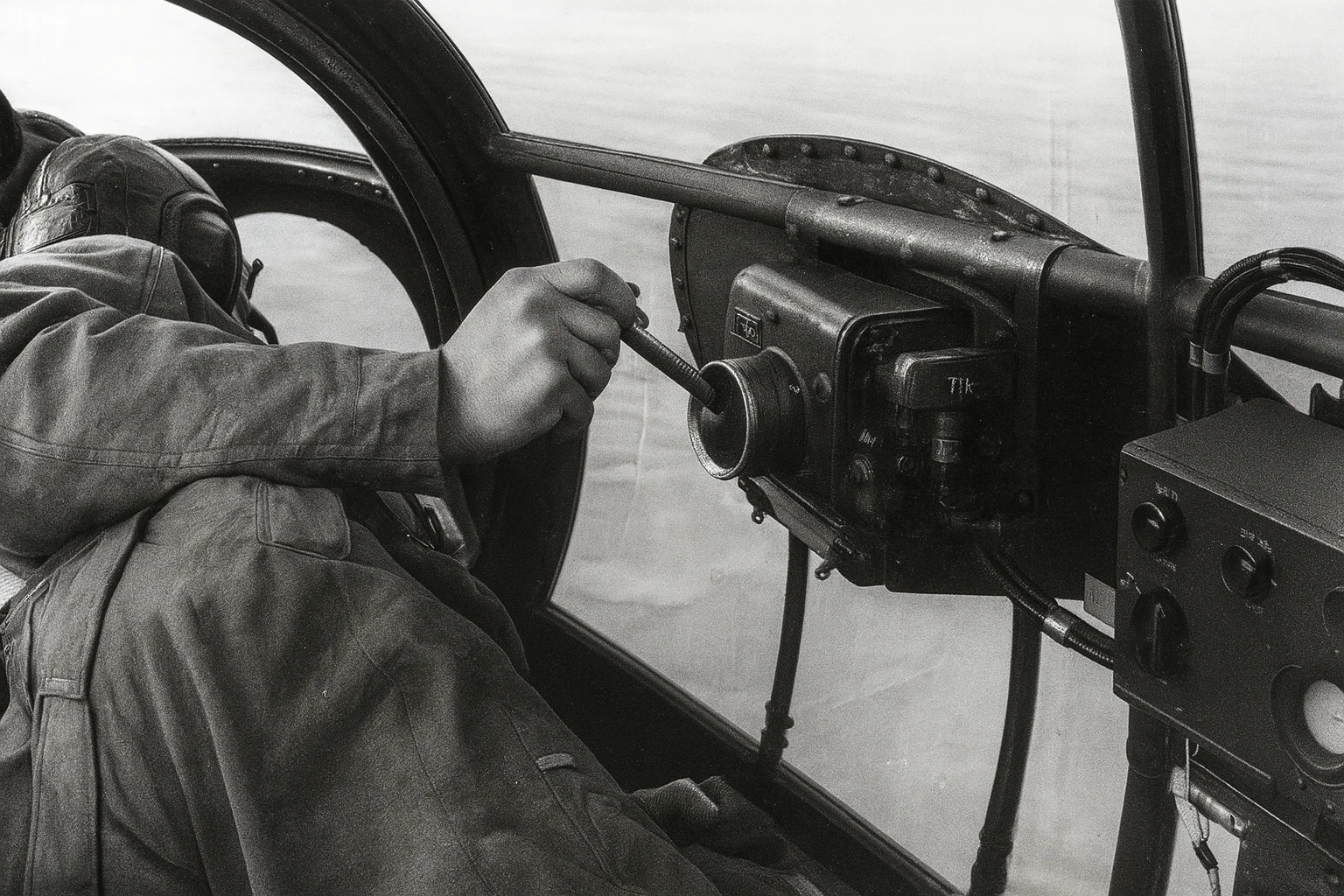
Bomb Aimer Position
Maj. Hajo Herrmann a distinguished bomber pilot later to become famous as the originator Wilde Sau night interceptor tactics flew on a demonstration flight of an Hs 293 launch. Herrmann was likely flying with an experimental and development unit which carried out Hs 293 experiments from September 1942 to March 1943 in the vicinity pf Peenemunde. From an He 111 carrier aircraft Herrmann watched the approach to the target, a beached German freighter. The bomber originally headed toward the ship but turned to place the ship off to its right several kilometers away. The observer said he would aim for the No. 2 hatch. When launched the bomb was initially out of sight but soon surged ahead of the carrier aircraft with its rocket motor ignited. The target ship was then ahead and to the right of the He 111. Herrmann related:
What happened then was exciting and fantastic. The bomb, with its small wings, went into a curve and headed for the steamer. The observer explained aloud how he was steering it – a little higher, down a bit, a fraction to the right. The bomb, by then flying without propulsion, left behind a trail of smoke so that it could be seen and steered. Then it struck. Just above the waterline, in line with the No. 2 cargo hatch.
Herrmann had flown many antishipping missions “in an antiquated way”: through flak garnering modest successes while his crews suffered grievous losses. As an officer serving on the Luftwaffe staff, he considered the new weapon combined with the right aircraft ideal “for convoy battles.” It is not clear everyone shared Herrmann’s views. Kampfgruppe II/KG 100 which flew the Do 217E-2 was declared operational with the Hs 293 and deployed from north Germany to bases in France at the beginning of July 1943. No operational missions were flown in July or most of August 1943.
There may have been opinions among some that new techniques were not really needed or required more training. That view may have been reinforced by a Luftwaffe operations report issued 14 August 1943. It described results of a night combined torpedo and low altitude bombing attack on a 40-ship Allied convoy in the Mediterranean based on reports from the units involved.
An eastbound convoy was sighted at dusk on 13 August. Forty He 111 torpedo planes and 24 Ju 88 torpedo planes were sent out for this attack. Fifty-nine planes attacked. The Luftwaffe staff recorded information it received:
The final report on results claims hits on a total of 25 vessels for 176,000 GRT. 1 tanker and 2 destroyers were observed sinking and 3-4 merchant ships were burning. During the attack corvettes attempted to smoke-screen the convoy.
Two days later the convoy arrived at Gibraltar and German observers sent their report. Twenty-five freighters and 14 escort vessels arrived. Two damaged freighters were towed in during the night. In other words, the results of conventional attacks were wildly exaggerated. It may not be too much of a stretch to image this had some effect on getting new weapons into action.
First Combat Use and Allied Reactions
Guided Bombs Get into Action
On 23 August 1943 the Luftwaffe high command daily operations report contained this notation:
A group of several destroyers, joined occasionally by a cruiser, has for several days been cruising on varying courses off the northwest corner of Spain at a distance 20 to 200 miles from the coast. This is evidently the patrol group which is directed by planes in attacking our submarines. Action against them with the Kehlgeraet has been ordered.
Kehlgeraet (Kehl device) refers to the Kehl/Strassburg transmitter/receiver system used to guide the Hs 293. The main strength of II/KG 100 the unit trained to use the Hs 293 was located at Cognac in southwest France not far from the Bay of Biscay. Apparently upon a report from an Fw 200 of KG 40 of the suspected anti-submarine group an attack force of twelve KG 100 Do 217’s escorted by eight Ju 88’s was launched. This was the Royal Navy’s 40th Escort Group. The 40th Escort Group consisted of three frigates and three sloops covered by light cruiser H.M.S. Bermuda. The sloops became the target of the attack. Sloops were roughly equivalent to U.S. Navy destroyer escorts. In fact, one of the sloops was a former U.S. Coast Guard cutter provided to the British via Lend Lease. All had been upgraded for anti-aircraft defense. The warhead of the Hs 293 was essentially a general purpose bomb. It was not optimized for armored warships. It could do serious harm to merchant vessels or destroyer-class warships or smaller, i.e., the “convoy battle” mentioned by Hajo Herrmann.
This attack is typically glossed over in accounts available in published sources or on the internet. Given its historic nature it seems worthy of more fulsome treatment. The following account appeared in an intelligence summary of the Allied Northwest African Air Forces a couple weeks after the attack based on a collation of available sources (my edits minor only).
Allied Account of First Attack
According to the intelligence report:
At about midday on the 25th August 1943, three sloops were proceeding inline abreast some 3,000 yards apart at 8 knots steering a 210° course against the wind. Two FW-200 aircraft were observed to be shadowing astern out of range at about 13.15 hours, and at 13.42 hours a number of enemy aircraft, subsequently counted as 22 and apparently consisting of D0-217’s and ME-110’s, approached from astern and disappeared out of range. The aircraft kept at a respectable distance throughout the attack and were never nearer than 8,000 yards. The aircraft then reappeared flying in small groups of two, three and four, each well separated and flew aimlessly around the ships, each group, however, developed an attack in similar manner which consisted of approaching the ships at a height of about 3,000 ft. on the starboard bow flying downwind on and reciprocal course to the vessels which eventually took them past the ships at a minimum distance of about 4 – 5 miles. When the aircraft were placed on a bearing of between green 20 and green 70 the HS-293 bombs were released. The leading aircraft of the group signaled a bright white light, whereupon each aircraft in the group was seen to have a trail of white smoke developing approximately 100 ft. beneath it, in front of which was a dark object. This object gradually forged ahead to a position approximately 100 yards in front of the aircraft, and after a time, variously estimated at from 5 – 10 seconds from release, it turned off in the direction of the ships. A devious course and a steep angle of dive were then observed, after which the object subsequently seen to be a glider bomb steadied up and headed in the direction of the ships at a shallow angle. During this part of the flight the bomb was seen to be gliding on a steady course in the direction of the ships with occasional well-regulated banked turns to maintain its direction towards the target. In some cases in the final stages of the path to the target, the bomb became less stable, and in one case its behavior was described by one witness as exceedingly “erratic and “frantic”. Nevertheless, some remarkably near shots occurred, 12 HS-293’s were believed to have been dropped and of these 7 fell in the target area, of which 5 went uncomfortably close. The remainder were extremely wide, while one was dropped apparently by accident before the attack commenced and fell near a Spanish trawler some distance away. All but one of the bombs exploded on impact with the water. The explosions were not remarkably violent and were consistent with thin walled 250 or 500 kg. bombs in their effects. All ships were altering course throughout the attack. The nearest vessel, H.M.S. Bideford, reported 5 bombs passing close to the ship. The first hit the rigging, carried on and exploded on striking the water on the port side. This is the one which was photographed. The second passed across the bows and headed for the second ship (H.M.S. Landguard). The third one passed very close to the Bideford’s stem and burst on the port bow holing all forward compartments and causing casualties. Portions of filling from this bomb were recovered indicating not only the type of filling – trialen, but that partial detonation had taken place. If complete detonation had occurred, much heavier damage would have resulted. The fourth struck the water and exploded 30 yards short abreast of B gun on the starboard side and exploded. The fifth struck the water and exploded 30 yards short abreast the bridge starboard side causing no damage. Three bombs were reported by H.M.S. Landguard. The first has already been mentioned above as Bideford’s second, and fell in the water short of the ship and exploded. The second did likewise. These two were well aimed at the ship, but fortunately lost flying speed and fell in the water before arriving. The third one was on the log line 100 yards from the ship, exploded but did no further damage…The ships opened fire on the aircraft using Radar ranges, but no hits are claimed. The Oerlikon guns opened fire on one Hs 293, but similarly without success.
As might be imagined this attack with a new weapon resulted in a flurry of message traffic among Allied commands and between Europe and the U.S. Some of the information in the early attempts to disseminate information ended up being unsubstantiated. Even the measured account related above incorrectly identifies the escorts as Me 110’s rather than Ju 88’s. There were thoughts that these bombs were meant to explode in the air or run underwater or skim or skip on the surface of the water. The report dismissed those notions.
As noted in the report H.M.S. Bideford in addition to a bomb hitting her rigging, received a bomb that penetrated her hull which fortunately only partially detonated. Out of a crew of less than a hundred souls one was killed and sixteen injured from the partial explosion. Bideford spent most of September under repair but returned to operations early in October. Landguard suffered no personnel casualties but near misses did cause some damage. She also underwent repair in September but was off to her next assignment in the Indian Ocean less than a month after the attack.
The German version of the Kehlgerat attack issued in the Luftwaffe’s operations summary was:
Owing to a number of technical and operational failures only five near misses were scored on 2 destroyers. Most of the bombs went wide. 1 destroyer stopped emitted white smoke, and blew up at 1450 hours.
Two days later there was more positive information to report:
Our reconnaissance again spotted a submarine-chasing group of 1 cruiser and 4 destroyers in the sea area off Cape Villano…They were attacked by 14 of our bombers at 1416. In this attack 1 destroyer was sunk and the light cruiser damaged.
The German bombers encountered the 1st Escort Group consisting of 2 sloops, 4 frigates and 2 covering destroyers. They had replaced the depleted 40th Escort Group which was withdrawn. The ship sunk was sloop H.M.S. Egret. Canadian destroyer H.M.C.S. Athabaskan was hit and damaged. These ships were larger and more modern than the ships attacked two days earlier. Gruppenkommandeur of II/KG 100 Fritz Auffhammer was apparently credited with the sinking and 1Lt. Paulus with damage.
Egret went down with 194 members of her crew and four R.A.F. radio intelligence specialists (she was fitted with special radio gear). Thirty-five survivors were rescued by the damaged Athabaskan which suffered four killed and 37 wounded among her crew. Athabaskan was out of action until early November. Egret became the first vessel sunk by a radio controlled bomb.
These events should be recorded for their historical significance. In addition, they had an immediate tactical impact. The Royal Navy withdrew its anti-submarine escort groups from the Bay of Biscay. However, II/KG 100’s stay in western France was short. War in the Mediterranean was heating up, and it was soon transferred to that theater where III/KG 100 was also operating.
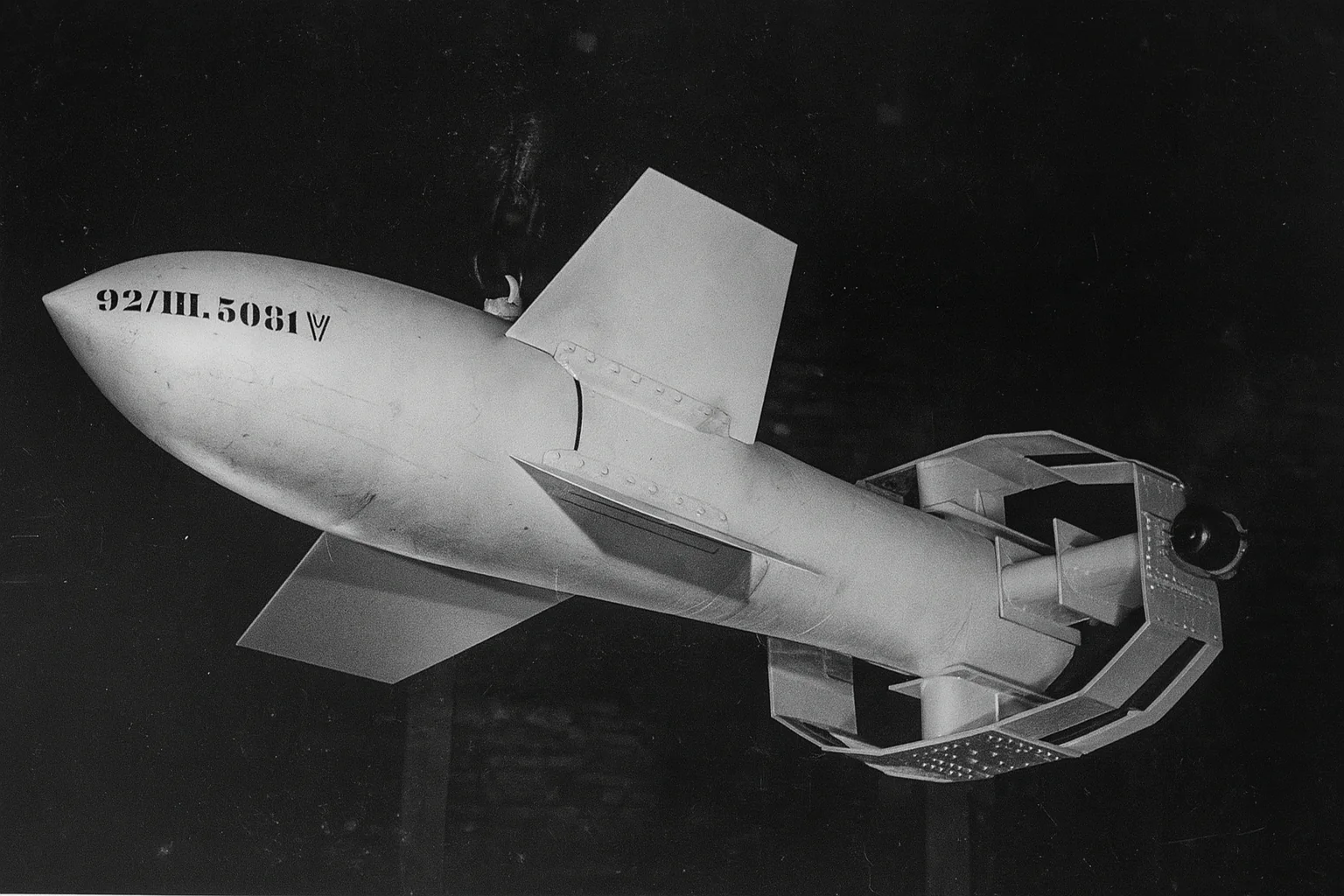
FX 1400
Fritz X and the Escalation of Precision Strike
Another Guided Bomb, More Sinkings
In September 1943 both II/KG 100 and III/KG 100 operated over the Mediterranean. The Do 217K’s of III/KG 100 were armed with the FX 1400 (Fritz X) 1,400 kg gravity bomb modified with guidance provided by the same Kehl/Strassburg system as the Hs 293. Flying from Marseille/Istres in France the first Fritz X mission was carried out a few days after the first Hs 293 mission. Early missions against ships in port and at sea were without notable success. The first success was a spectacular one. On 8 September 1943 Italy signed an armistice with the Allies. Units of the Italian Navy sought to surrender to the Allies. On 9 September the modern battleship Roma was attacked while in route to Malta trying to do so. She was hit by multiple FX bombs; broke in two and sank with most of her crew and an Admiral who was directing the surrender. Battleship Italia (ex-Littorio) was seriously damaged the same day. During the invasion at Salerno in mid-September three Allied cruisers and a battleship were hit and badly damaged. On the last day of the month LST-79 was sunk by an Hs 293 of II/KG 100 at Ajaccio, Sardinia.
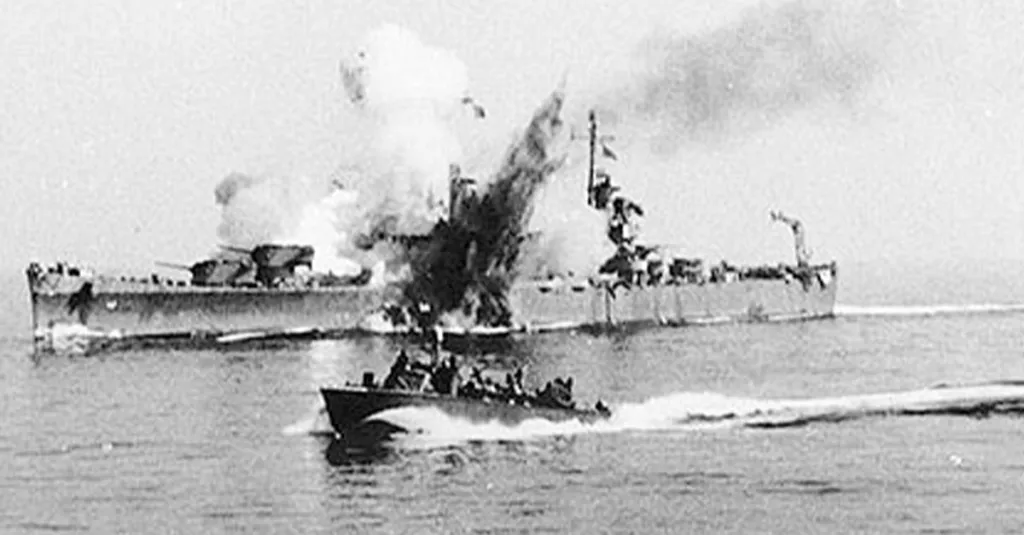
X 1400 USS Savannah
In these early operations no bomb-carrier aircraft were lost in combat. Later operations showed that while stand-off capability was highly useful in avoiding casualties from anti-aircraft defenses it provided no immunity when defending fighters were present. Against convoy UGS 18 in early October several Do 217E’s armed with Hs 293’s managed to hit four ships sinking one and damaging three. In some later operations against convoys, He 293 aircraft attacked convoy escorts while torpedo planes attacked merchant vessels. During operations in the Aegean in mid-November Hs 293’s sank destroyer H.M.S. Dulverton and damaged two others.
The Rohna Disaster and Tactical Impact
In addition to KG 100 the He 177’s of KG 40 were also equipped with Hs 293’s. A mix of more than a dozen German aircraft attacked convoy KMF 26 on 26 November 1943. The Hs 293 carried by Maj. Hans Dochtermann’s Heinkel hit 8,600-ton H.M.T. Rohna. According to a survivor the bomb hit “above the waterline at a 15 deg. angle from the horizontal and opened a hole about 30’ by 10’. The bomb detonated inside the ship and opened… another hole on the opposite side well below the waterline.” Rohna, carrying nearly 2,000 U.S. Army soldiers, sank in two hours. 1,015 soldiers were lost along with 134 British and Indian crewmen. This remains the largest loss of U.S. servicemen at sea. During this attack it is believed as many as six Hs 293’s were diverted by radio jamming.
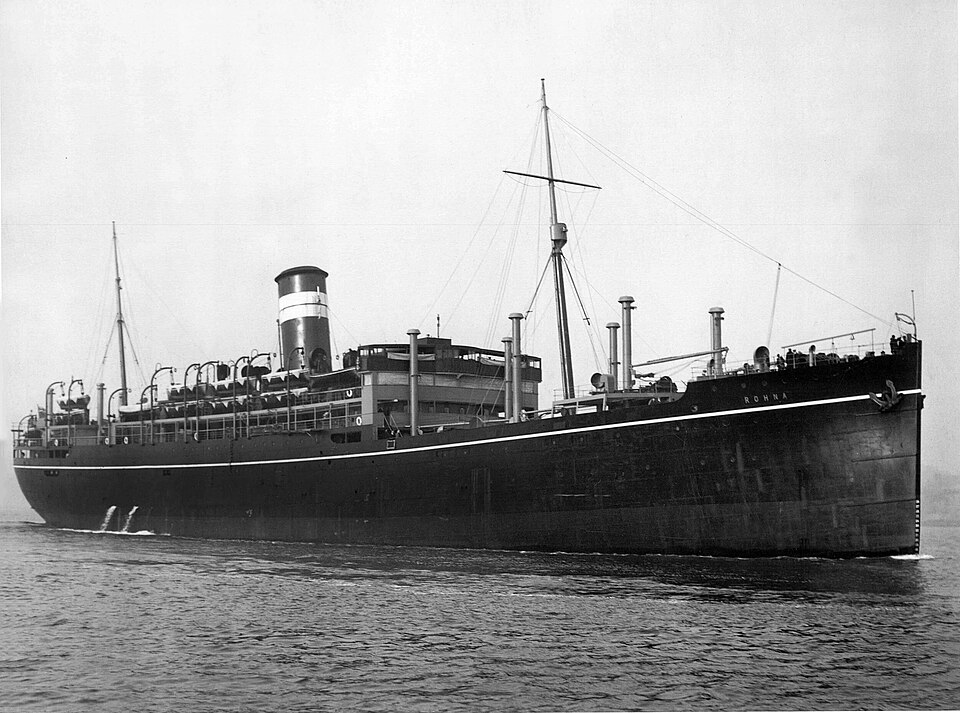
Troopship, HMT Rohna
Allied Countermeasures and the End of Effectiveness
By March 1944 Allied counter measures primarily smoke screens and electronic jamming made daytime anti-shipping operations impracticable and they ceased. There was some use of Hs 293’s against land targets primarily bridges. A Luftwaffe operations report on the use of both the Fritz X and Hs 293 by KG 100 recorded sixty-five shipping operations involving 487 aircraft with 500 bombs carried. A number of bombs were lost with aircraft or returned to base. Three hundred nineteen bombs were dropped at the target of which 215 functioned correctly with over 100 hits scored on 79 warships and merchant vessels.
German use of the cruise missile (V-1) and ballistic missile (V-2) in combat are well known. It took many years for other nations to improve their efforts after the war.
American Efforts: AZON and Early Drone Concepts
American Efforts and the Delayed Legacy
The United States also developed stand-off weapons and remotely controlled bombs in World War II. One was AZON for “azimuth only” a bomb which saw combat use in attacks in Europe and the Asia primarily against bridges. The AZON control system was also adapted for use in Operation Aphrodite. A B-17 or B-24 loaded with bombs took off with a pilot and once aloft control was taken over remotely by another aircraft and the pilot bailed out over friendly territory. The idea was that the remotely piloted aircraft would then crash into U-boat pens or V-1 cruise missile sites, targets that were otherwise difficult to destroy. This was the project in which Joseph Kennedy, future President John Kennedy’s brother, was killed. The project was abandoned.
Another project that was tested in the combat zone was a television guided bomb. Interstate Aircraft and Engineering Company developed the TDR, a small twin-engine aircraft capable of carrying a bomb which could be guided via television. Initial combat tests were carried out against Japanese ships at Bougainville in the Solomons in late September 1944 and later against targets at the Japanese base at Rabaul on New Britain Island. The television link and control system worked but the aircraft flew low and slow and were easy targets for AA fire. Its potential for future development was not recognized.
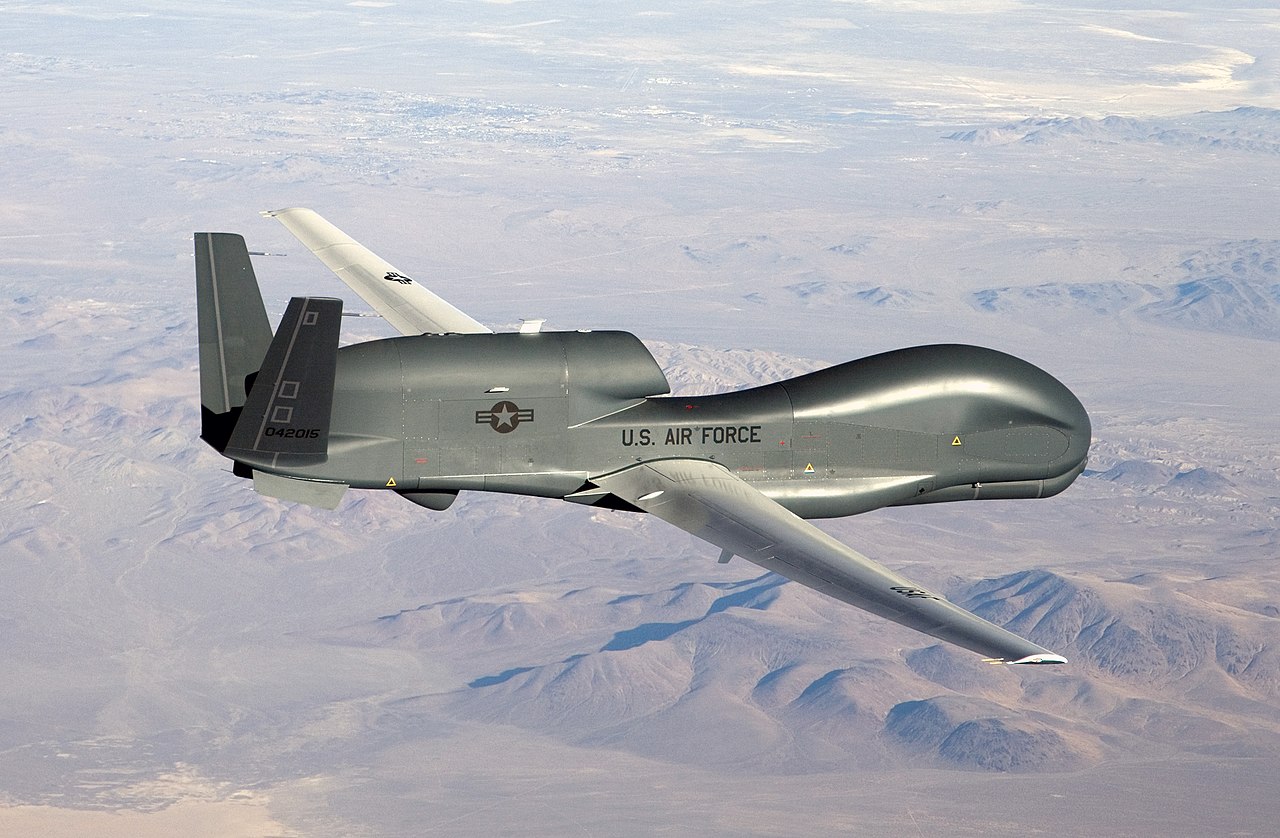
Global Hawk
The Delayed Evolution of Precision Warfare
The reticence of the military community to develop remotely controlled and autonomous weapons is hard to explain but is very real. While at DARPA I heard scientists and engineers relate stories about U.S. Air Force refusal to support unmanned reconnaissance systems that had great promise. DARPA managed to eventually breakthrough in that area. Initially it was with remotely controlled systems but eventually autonomy was achieved with Global Hawk. The Navy resisted the idea that Arsenal Ship should be crewless and eventually sank the program. Years later the idea seems acceptable, even fashionable, especially after DARPA’s Grand Challenge resulted in the successful demonstration of driverless cars. Technologies applied in that program have been in our private vehicles for more than a decade now. Global Hawk and Arsenal Ship were early examples of prototype projects outside the normal procurement contracting system. The military has been slow and resistant to adopting new ways of doing business. Perhaps now is a good time to contemplate the slow pace of progress in light of capabilities that were initially demonstrated more than eight decades ago. For resources related to these comments visit strategicinstitute.org.