
In December 1939, the U.S. War Department directed the Hawaiian Department, the senior Army command in Hawaii, to establish a capability to detect and track aircraft in the vicinity of the islands. Plans for an Aircraft Warning Service (AWS) were to be formulated by April 1940. Establishment of the service was primarily the responsibility of the Army’s Signal Corps. Operation of the AWS once established as a tactical system would come under the Air Corps. Because the new service required stations to be located on suitable ground typically at a high elevation the Territory of Hawaii and U.S. Park Service became involved in location decisions and other matters. Critical to the system would be stations capable of detecting enemy aircraft at ranges sufficient to allow for successful pursuit interception and anti-aircraft defense.
The need for measures such as long-range search and radar to protect ports of major fleet units was driven home by examples in 1940. A significant part of the Vichy French fleet was located at Mers-el-Kebir, Algeria. The British feared their modern warships would fall into German hands. In July 1940 the British used aircraft and naval bombardment to sink and disable major French warships moored there. In September an attack on warships and merchant shipping in port at Benghazi Libya was initiated by aircraft followed by naval bombardment. Finally, in December 1940 using only carrier borne aircraft the British disabled much of Italy’s battleship fleet at Taranto forcing survivors to relocate far away from the critical battle area in the vicinity of Malta. Naval warfare and the defense of ports had taken on a new dimension.
Radar Development
Pioneering work
A fundamental idea relating to radar (radio detection and ranging – “ranging” initially referred to finding direction not distance) can be traced back to work of J.C. Maxwell in the 1860’s. Maxwell theorized that electromagnetic energy propagated in waves. Maxwell’s theory was experimentally verified by Heinrich Hertz in the 1880’s who was able to transmit controlled radio waves. The theory received practical application through the work among others of Guglielmo Marconi who transmitted wireless telegraphy across the Atlantic. In the first decades of the twentieth century radio technology blossomed with advances in sending and receiving sets, antennas, and other technologies resulting in transmission of voice as well as telegraphic messages. Beacons (radio ranges) to help ships and aircraft determine their position were developed. In 1922 researchers at the U.S. Naval Research Laboratory (NRL) noted that a wooden vessel on the Potomac River interfered with radio transmissions between stations on opposite sides of the river. Applications such as iceberg detection by ships were theorized. By 1931 aircraft operating near transmitters were observed to disrupt radio waves. Interest mounted. Skipping numerous interesting details, in 1935 a major experiment involving aircraft detection took place in Britain. Installations featured very tall antenna masts. Work proceeded with some urgency considering the announcement the same year of German rearmament and unveiling of an air force (Luftwaffe). In 1937 Britain began development of a system to detect aircraft approaching its coast from across the North Sea and English Channel. When war was declared two years later the system was in operation. In addition to detection, the system included a means of filtering information and providing directions to intercepting fighters as well as alerts to relevant anti-aircraft artillery commands. Concurrently developments in radar technology were being pursued in several other nations notably the U.S., Germany and the Soviet Union.
U.S. Radar Development
In the U.S. the NRL’s early discovery of radio wave interference evolved several years later into a secret program exploring continuous wave signals. In 1932 an aircraft fifty miles away was detected. However, direction was uncertain. In 1933 Bell Telephone Labs began similar work and the Navy’s program was declassified the following year. The Navy also began work using pulsed signals. This promised to detect direction as well as range. In early 1936 representatives of the Army Signal Corps visited NRL and learned about their CXAM pulsed radar results. Later that year, the Signal Corps Lab, Ft. Monmouth, N.J. sent two trucks loaded with pulsed radar equipment (transmitter and receiver) to Newark airport to observe nearby aircraft. Six months later, their equipment’s effectiveness was demonstrated to the Secretary of War and Chief of the Air Corps. Additional funding became available and soon resulted in a searchlight directing and gun-laying radar, the SCR 268. In 1937 Assistant Chief of the Air Staff Hap Arnold suggested the need for a search radar with a fifty-mile range later revised to 120 miles. Requirements were defined and by October 1938 Westinghouse received a development contract for a truck-borne mobile radar as well as a fixed-site version. By May 1939 the mobile pulse-echo radar was officially adopted as the “Radio Set SCR 270”. At the same time the SCR 268 was declared to be wartime ready. The term primarily used to describe radar in this period was RDF for radio direction finding. The term radar was first officially adopted in 1942.
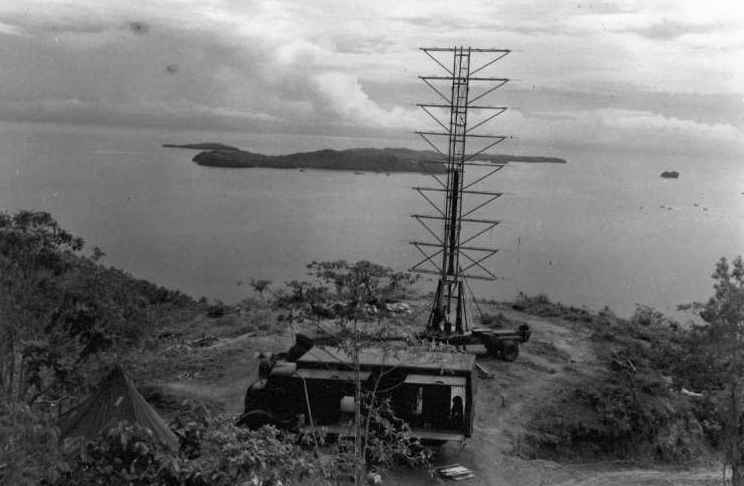
Opana Radar Station
Production of the SCR-270 and SCR-271 got under way in 1940. By October 1940 one set was in place at the Atlantic end of the Panama Canal followed in December by a unit on the Pacific end. Production reached eighty-five sets by June 1941. By then potential sites for radar stations had been identified and approvals obtained in Hawaii. In July the first sets arrived in Hawaii where installations were initially established on Oahu. A single set was put in operation in the Philippines. These early sets gave readouts on an oscilloscope rather than the later plan position indicator (P.P.I.) display and had no identification friend or foe (I.F.F.) capability. They were, however, state of the art for the period.
After the radars arrival in Hawaii mobile stations were set up around Oahu. A reserve unit was stationed at Fort Shafter. Where commercial power was not available the units were powered by generators. Technically advanced detection capabilities were just part of the aircraft warning problem. Collecting, filtering, and disseminating information with directions (command and control) was an essential element.
The U.S. Army had conducted a major exercise involving a detection network based on ground-based observations as early as 1933. Theorists of pursuit aviation had elucidated the implications drawn from such tests. Among them was Capt. Claire Chennault who later utilized detection networks to great effect with his American Volunteer Group (Flying Tigers) in China and Burma. The British developed the gold standard in aerial command and control with their Fighter Command’s regional control of information received from their chain of radar stations and ground observers. This provided an immense advantage during the 1940 Battle of Britain. Limited fighter resources could be marshalled in time and space to disrupt and inflict damage on enemy formations from tactically advantageous positions.
Radar in Hawaii
Officers from the U.S. 1st Air Force in the northeast United States visited Britain to learn about their techniques. In the Spring of 1941, they sponsored a training program to disseminate lessons learned from the visit to R.A.F. Fighter Command. Among those attending were two Air Corps officers from Hawaii, Captains Bergquist and Tindal. Upon return to Hawaii, they were initially returned to their former duties. There seemed as little urgency in setting up a information center as there had been in getting the radar sets in operation. Eventually the 14th Pursuit Wing tasked Major Kenneth Berquist with getting a control center operational. However, the task involved many elements and there was no one in overall command of the effort. Responsibility was divided and progress slow.
In November 1941 nearly two years after the War Department had first tasked the Hawaiian Department with establishing an air warning service the key elements of such a service were ready for a test. A Signal Corps warehouse at Fort Shafter had been modified to create a replica of an R.A.F. control center. A large plotting board was manned by a Signal Corps NCO and several enlisted men as plotters. Overlooking the board from one floor above was the center director. An information center provided observations from ships at sea, long-range aircraft, other islands and the Oahu radar stations which were reflected on the plotting board. Assisting the director were representatives from Army air, Navy air and civil aviation to keep track of friendly aircraft. The director was supported by an aircraft controller and an anti-aircraft artillery controller. The aircraft controller was in contact with the radio room of the 14th Pursuit Wing which could task Army fighters as well as pass information to Navy and Marine Corps aircraft. On November 12, 1941, the air warning center was fully manned for a test. The Navy simulated an attack from an aircraft carrier eighty miles out at sea. The approaching aircraft were detected, identified as hostile and within minutes pursuits were scrambled and intercepted the “enemy” thirty miles from shore. The result was not entirely surprising since aircraft as well as radar stations were on alert. It was known that an “attack” was coming and from what direction. None the less this and other exercises demonstrated the potential effectiveness of the fully manned warning system.
At the Control Center
On 27 November 1941 Washington issued a war warning message. Hawaii then had six stations in operation. Five, four mobile stations plus a reserve station at Fort Shafter, were on Oahu. In the days leading up to the Japanese attack on Hawaii the radar stations were being operated from 0400 (4 a.m.) to 1100 hours (all stations) and staggered operations with three stations at a time operating from 1100 to 1600. This contrasted with Panama and the Philippines where stations were operating in three shifts covering 24 hours. Normally the Hawaiian Department was off duty on Sundays. On December 6th 2Lt. Grover White, CO of the Air Warning Signal Company requested Maj. Bergquist to approve limiting radar operations from 0400 to 0700 on Sunday. Bergquist agreed. On December 7th the control center was only manned by Signal Corps plotters a supervising NCO and several enlisted men, a telephone operator, and a pursuit officer in training. Lieutenant Kermit Tyler of the 78th Pursuit Squadron was on duty from 0400 to 0800. Beginning during the 6 o’clock hour, radar stations began to report sightings. The first report was of a sighting south of Oahu. Later reports of sightings included plots far north of Oahu headed south. Some of the plots were likely general aviation aircraft or friendly service aircraft in the vicinity. Among them, however, were two Type Zero reconnaissance seaplanes (E13A1) on pre-attack reconnaissance missions to Lahaina and Oahu. None of the plotted sightings seemed unusual to anyone in the control center including SSgt. Stanley Wichas, the supervising Signal Corps NCO, the most experienced person present.
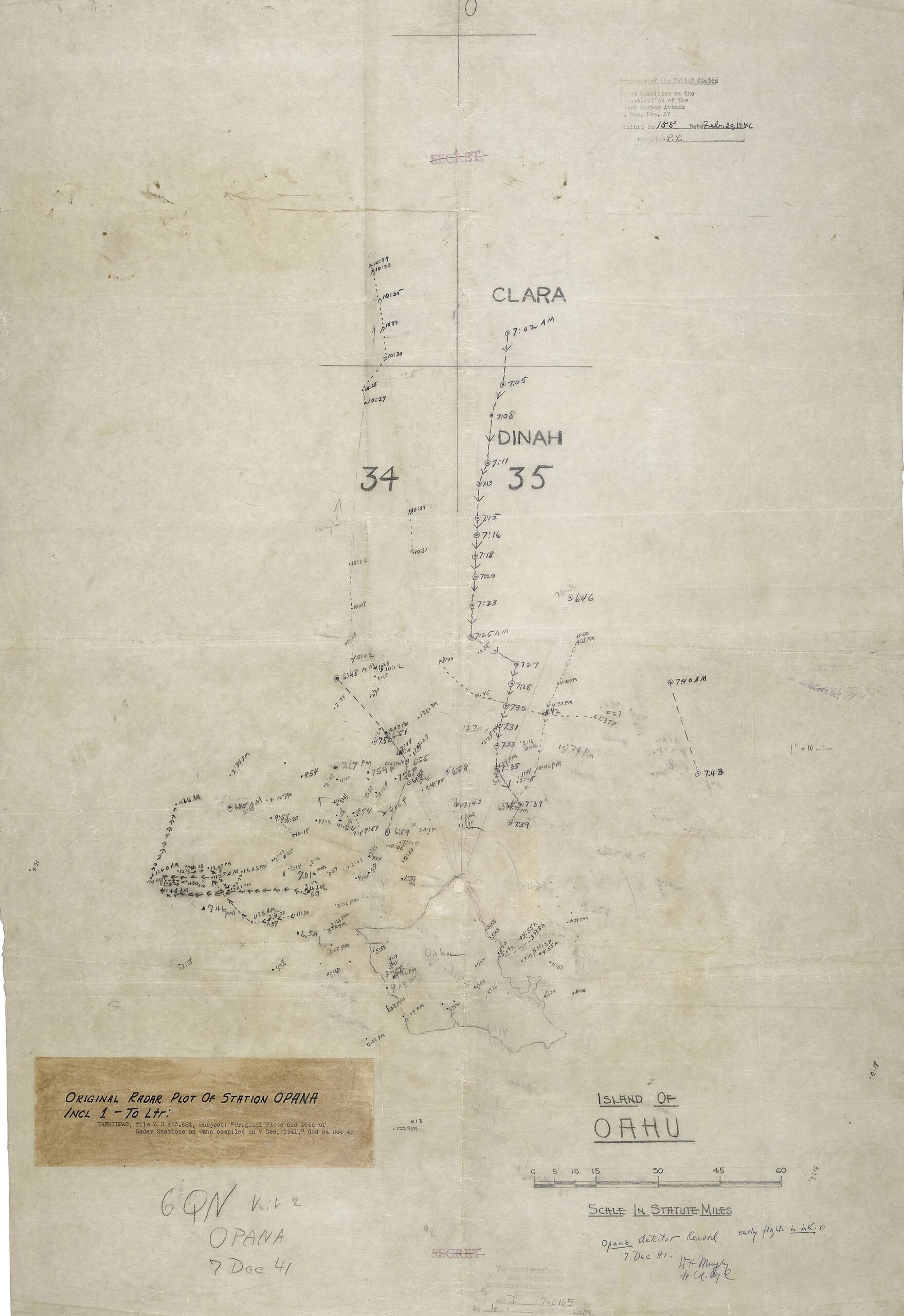
Opana Original Plot
At 0700, the end of their duty tour, the plotters left the center to go to breakfast. At the same time all the radar stations began shutting down except for Opana on the northern tip of Oahu. Manned by two privates (the third man a generator operator failed to show up) the station continued to operate to give the junior radar operator Pvt. George Elliot more training time on the oscilloscope. At 0702 Elliot noted a big blip indicating a target 132 miles distant, 3 degrees east of north. He had sighted the Japanese first wave of attackers. Aided by the northeast trade winds they were approaching Oahu at about 160 miles per hour. Elliot’s mate Pvt. Joseph Lockard considered the indication on the oscilloscope the largest he had ever seen. After observing the target’s progress for about fifteen minutes Lockard called the control center. After some discussion the operator turned the call over to Lieutenant Tyler, the only other person present in the center. This was only Tyler’s second visit to the control center. The unplotted target Lockard described might have been Army or Navy planes on maneuvers or B-17s arriving from the mainland, the latter possibility apparently being the most likely in Tyler’s mind. Not having been told the big blip was estimated at fifty plus, he suggested to Lockard the sighting was unimportant, ending the conversation. Furthermore, since he was at the center only to observe and learn its operation Tyler took no further action. About 8 o’clock when Tyler stepped outside of the control center and saw aircraft in the distance his first thought was that the Navy was engaged in exercises on Sunday, which was unusual. Meanwhile Elliot and Lockard shut down the radar. When the truck arrived to take them to breakfast, they left the site prepared to brag that they had made a sighting at a range of over 130 miles. On the way another truck passed them at high-speed going in the opposite direction carrying soldiers dressed in full field gear. They were soon to learn the meaning of that strange encounter..
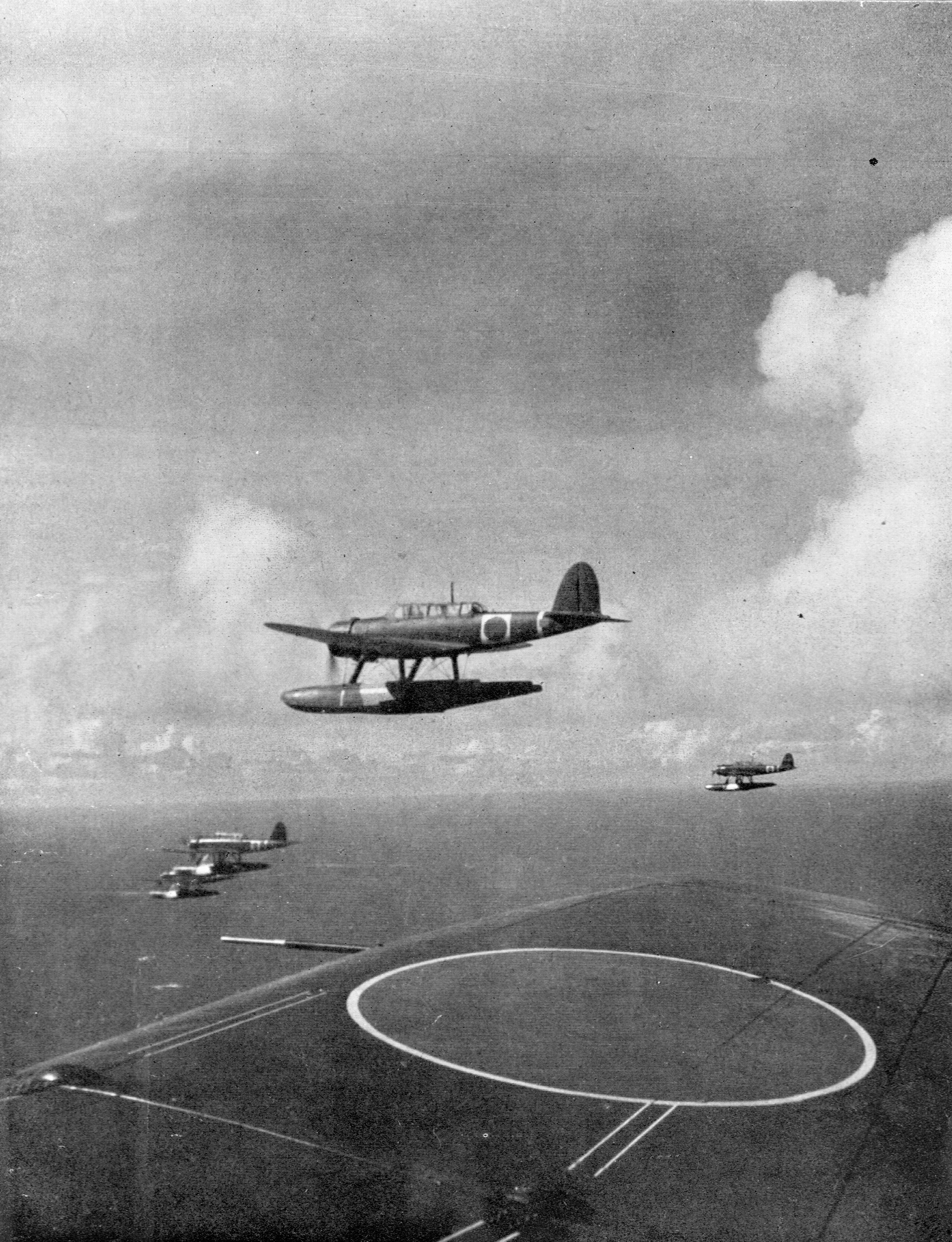
Type Zero recon planes – first over Oahu and Lahaina
It quickly became obvious that Oahu was under attack. The plotters were recalled. At 0820 2Lt. White the Air Warning Company CO arrived at the center. Maj. Tindal arrived to assume the position of director. No naval officer arrived until mid-afternoon. Tyler remained on duty for most of the next two days with only a couple breaks for sleep. The situation reflected on the plotting board was chaotic. Once fighters were airborne, the 14th Pursuit Wing apparently directed them to fly south toward Barbers Point where Japanese planes were attacking Ewa airfield. Efforts to locate the attacking force and launch an attack were mired in the confusion of the moment. The direction from which the attack had come was mapped on a diagram created at Opana but was not in the historical plotting record of the center. Situational awareness in the uncoordinated, undermanned information center was almost completely absent.
Air Battles Over Hawaii
First Aerial Encounters
The big blip on the Opana oscilloscope seen by Private Elliot shortly after 0700 was the first wave attack force from the Japanese aircraft carriers. One hundred eighty-three aircraft were then less than an hour away. In addition to 140 strike aircraft, torpedo planes, level bombers and dive bombers, there was an escort force of forty-three Zero fighters. The escort was originally composed of three combat units of nine Zeros each and three with six Zeros. However, two fighters (from Shokaku and Soryu) failed to make it to Hawaii. One Zero crashed on takeoff (pilot saved) and one with engine trouble never got off its carrier. The escorts had orders to stay close to the strike aircraft and counter any American interceptors. If there were no interceptors aloft over Hawaii, their orders were strafe aircraft on the ground at assigned airfields.
Lapses in American leadership that led to a lack of long-range search and a dysfunctional air warning capability also extended to the readiness of the interceptor force. No fighter pilots were standing alert duty. Nor were the fighters dispersed. They were parked in rows to facilitate security against sabotage. None were armed. Ammunition had been removed and stored for increased security. In some cases, belted ammunition was unbelted to make storage easier. Fifty-five P-40B’s, nine P-40C’s, and twenty P-36A’s were potentially available to intercept. All were unarmed. None was immediately ready to intercept enemy aircraft.
About 0740 several events related to the first aerial clashes over Hawaii occurred. Having lost the target in ground clutter as it approached the island, Lockard and Elliot shut down the Opana radar and secured the site. Just north of the island Cdr. Mitsuo Fuchida commander of the attacking Japanese had a clear view of Oahu and concluded the Japanese had achieved surprise. He fired a flare to initiate attack deployment by the strike elements. At Honolulu’s John Rogers civil airfield two Piper Cubs took off. The pilots had obtained their private pilot licenses through the auspices of the Civilian Pilot Training Program from a flying school at the airport. The two pilots and a passenger were all members of the California National Guard 251st Coastal Artillery Regiment based at Camp Malakole near Barber’s Point. Just weeks before that unit had received an SCR-268 radar to replace its sound detectors. The two Piper Cubs joined a few other general aviation aircraft in the air over Oahu that morning.
In addition to the Japanese other aircraft were approaching Oahu that morning. At 0740 two flights of twelve B-17s from California were still a half an hour or more from Hickam Field. Farther away also flying from California was a Pan American Airlines Clipper (later diverted to Hilo). Coming in from the west were two SBD-3 aircraft from aircraft carrier U.S.S. Enterprise headed for the airfield on Ford Island. The lead Dauntless was flown by the commander of Enterprise’s air group. His flight and sixteen following SBDs from VS-6 had spread out to conduct reconnaissance ahead of Enterprise returning to Pearl Harbor.
Shortly after 0750 the Japanese attacks began. Off the south shore of Oahu observers saw several Japanese planes attack two Piper Cubs. One Cub crashed into the sea almost immediately. The second followed shortly thereafter. Later some yellow-colored debris washed ashore and was identified as wreckage from one the Cubs. The bodies of pilots, Sgt. Henry Blackwell and Cpl. Clyde Brown, and passenger Sgt. Warren Rasmussen, were never recovered. One civilian aircraft was credited to Petty Officer Akira Yamamoto of Kaga despite orders not to attack civilian targets. The second was the “trainer” credited jointly to pilots from Akagi. The Japanese also attacked John Rogers airport where a Hawaiian Airlines DC-3 received hits including on an engine. Passengers had hastily disembarked prior to the attack.
The B-17s included two B-17Es and four B-17Cs of the 38th Reconnaissance Squadron under Maj. Truman Landon. A second flight of six B-17Es from the 88th Reconnaissance Squadron was led by Capt. Richard Carmichael. To make the long trip from California some equipment had been removed from the bombers and each carried two auxiliary fuel tanks in the bomb bay. Machine guns were stowed, and no ammunition was carried. During the night the flight formations loosened and became strung out. A couple Fortresses strayed off course until they could pick up commercial radio broadcasts from Honolulu.
As the first couple bombers being somewhat off course approached Oahu from the north they were flying parallel to the Japanese attack force without recognizing them as enemies. All were low on fuel and incapable of self-defense. Effective communication with the Hickam tower alerting them to the attack took place about the same time that they observed burning ships, anti-aircraft fire, and enemy aircraft. The bombers encountered “friendly” AA fire as well as drew the attention of Japanese fighters and dive bombers which generally inflicted only minor damage. 1Lt. Robert Richard’s flying a B-17C was the first aircraft over Oahu. He ran into Japanese fighters suffered damage and escaped in cloud cover only to be hit again after leaving the cloud. With 73 bullet holes a damaged engine and aileron he opted to land at Bellows Field despite its short length. His B-17 suffered additional damage in a wheels-up landing. It was thought repairable but eventually stripped for parts. It took several tries to land for the bombers that made it to Hickam. A B-17E flown by 1Lt. Robert Thacker ground looped avoiding obstructions when it landed there. It braked so heavily that a wheel caught fire but with minor damage. After surviving aerial attacks by three Akagi Zeros, strafing destroyed Capt. Raymond Swenson’s B-17C, landing at Hickam. A flight surgeon on board was killed. Getting into Hickam or other airfields involved harrowing experiences for most bombers. Two landed on the short field at Haleiwa. 1Lt. Frank Bostrom’s B-17E, hit by fighter gunfire, landed wheels up on Kahuku golf course not far from the Opana radar site. It was flown to Hickam a couple days later and returned to service. Pilots of Lt. (j.g.) Masanobu Ibusuki’s Akagi flight jointly claimed a B-17 and a “transport” the latter undoubtedly being a second B-17 (Richards and Swenson). Damage to most of the B-17s was relatively light. Nine were in commission by late the following day.
Not all the B-17s had landed when about 0820 Cdr. Howard Young, Enterprise’s air group commander, was close enough to see airplanes circling Ewa Field, the Marine air station. He assumed they were Army aircraft. Puffs of what appeared to be practice antiaircraft fire over the harbor on a Sunday not only surprised him but made him wonder how he would get into the field on Ford Island. Then one of the “Army” aircraft dove at his Dauntless firing. Later holes were found in its wing. His rear seat man was not a trained gunner but one of Admiral Halsey’s staff officers. Followed by his wingman he dove toward Ford Island as fast as he could shaking off his attackers in the process. Both airplanes got down safely sporting a few bullet holes. Young did not have time or opportunity to warn the VS-6 Dauntlesses. Between about 0830 and 0840 pairs and single SBDs flew into the maelstrom of enemy aircraft and friendly anti-aircraft fire.
A spectacular episode took place over Ewa where Marines observed an SBD dogfighting at low altitude with two or three Japanese planes assumed to be fighters. The Navy pilot was later thought to be Ens. John Vogt flying an SBD-2. Vogt was not only holding his own but pressed an attack close on the tail of an opponent who pulled up so sharply that the two aircraft collided. Parts of the planes rained to the ground. If his opponent was a Zero it was probably one of the two fighters lost from Kaga in the first wave.
Lt. (j.g.) Clarence Dickinson and wingman Ens. J.R. McCarthy clashed with five Zeros from Soryu over the ocean but within sight of Ewa. Dickenson’s gunner RM1/c Roger Miller was credited with shooting down one of the their attackers but was killed in the crash of their SBD-3. Both Dauntlesses were riddled by the Zeros and their pilots bailed out at low latitude. Both survived but McCarthy’s leg was broken. Dickinson landed near Ewa Field. He made his way to Ford Island while the attack was still in progress. Without informing officials he had just survived combat and a bail out; he was assigned an airplane and sent on a mission to find the Japanese aircraft carriers.
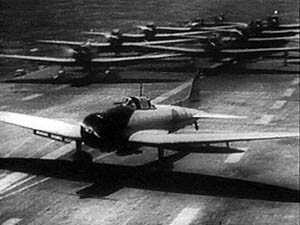
Type 99 carrier bomber
Lt. (j.g.) Frank Patriarca and wingman Ens. Walter Willis also clashed with Zeros, presumably also from Soryu. Patriarca evaded and headed back toward Enterprise. He eventually landed in a field on Kauai. No trace was ever found of Willis. Ens. E.T. Deacon was apparently another victim of the Soryu Zeros. His Dauntless was badly shot up and both he and his gunner were wounded. He tried to make it to Hickam Field but splashed just short of his goal.
Ens. Manuel Gonzales was heard over the radio indicating he was under attack. He was alone having separated from his wingman ten miles from Kaena Point. Gonzales was never heard from again. West of Kaena Point was the rendezvous area for Japanese planes after the attack. An intercepted message from Shokaku that was later translated stated: Six carrier bombers fought an enemy scout plane at the rendezvous point and shot it down.
In addition to the five aircraft shot down or missing several others were hit. SBD No. 6-S-2 was temporarily out of commission but otherwise damage was slight.
Two elements of Soryu’s combat unit were the Japanese aircraft primarily engaged with the Enterprise scout bombers. Petty Officer Shin-ichi Suzuki claimed two “Navy aircraft” and Seaman Isao Doigawa claimed three of the same description.
To state the obvious all the actions mentioned above took place with no warning or help from the Air Warning Service. An additional general comment is that aircraft identifications by participants in the air actions described are quite often inaccurate. See note at end of this article.
The Interception
Fighter pilots at various air bases on Oahu were awakened by Japanese bombing and American AA fire or otherwise became aware of an attack around 0800 or shortly thereafter. Several pilots of the 47th Pursuit Squadron based at Wheeler Field had attended a dance party at the Officer’s Club the previous evening and some had also attended a poker party that lasted for hours afterward. Most of the squadron’s planes were located at Haleiwa Field on Oahu’s north coast for gunnery training. Wheeler Field was hit by Japanese dive bombers early in the first wave. 2Lt. Kenneth Taylor had the presence of mind to telephone Haleiwa and request that two fighters be armed, fueled and warmed up. He and his mate 2Lt. George Welch sped toward Haleiwa in Taylor’s car. Shortly thereafter they were followed by a second car taking three pilots to the same destination. The cars raced over a narrow winding road ten or more miles to the small airfield. Both cars were unsuccessfully strafed by a Japanese aircraft en route. Due to a hasty departure some of the pilots were clad in Tuxedo pants or pajama attire.
Arriving at Haleiwa shortly before 0830 Taylor and Welch mounted P-40B’s which due to being at Haleiwa for gunnery training had only four .30 caliber wing guns armed and operational. Here things become somewhat murky. As the story goes, Welch was later recommended for the Medal of Honor. This was downgraded to the Distinguished Service Cross because he took off without authority. The January 1942 citation for the DSC stated that after arrival at Haleiwa: “Immediately, on his own initiative, he took off for the purpose of attacking invading forces, without first obtaining information as to number or type of Japanese in the attacking force, and proceeded to his initial point over Barbers Point.” This language tends to support the “without authority” rationale for the down grade. This might also suggest that the information center at Fort Shafter was fully functional and capable of giving the type of information mentioned which if intended was plainly false. Months later Welch wrote a multi-page report on his actions that day. It states that after the drive to Haleiwa: “We got out there and the Fighter Command [presumably the 14th Pursuit Wing] called us and requested us to take any pursuit we had and take off and proceed to Barber’s Point at 8,000 feet.” This may imply that Haleiwa and the 14th Wing radio room were in telephone contact. That is hardly surprising since Haleiwa had been over flown by elements of the Japanese first wave. Welch’s account clearly implies the Barber’s Point “request” was received before take-off. Both accounts agree that after take-off Welch and his wingman Taylor headed to Barber’s Point. Only Welch’s version gives a reason for doing so. His reason tends to undercut the “without authority” rationale.
Approaching Ewa Field located at Barber’s Point Welch and Taylor observed twenty or more airplanes they identified as dive bombers strafing the field. It is generally agreed that these were first wave aircraft. Welch, despite one of his guns jamming, and Taylor each claimed two victories. Welch’s fighter received a few hits fired by enemy rear gunners which inflicted only superficial damage. There is a conundrum in trying to identify their four claims with Japanese first wave losses which were three Zero fighters, a Type 99 dive bomber and five Type 97 carrier attack bombers. Welch reported that both of his victims had rear gunners. While both dive bombers and attack bombers had rear gunners, carrier attack bombers had no forward firing machine guns and would not have been strafing. Akagi’s Zero loss reportedly fell to ground fire while attacking Hickam. Kaga’s Zeros attacked Ewa and had two losses but one of those likely took place in an aerial collision with an Enterprise SBD an event reported by ground observers as described above.
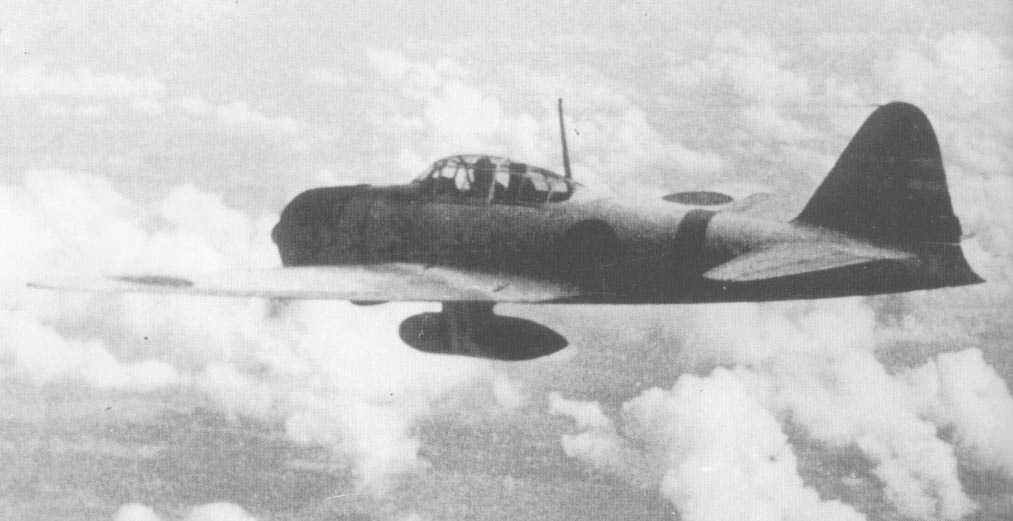
Zero showing “bomb” and elongated canopy – dive bomber?
Two of the three pilots that arrived at Haleiwa after Welch and Taylor were 1Lt. Robert Rogers and 2Lt Harry Brown who took off in P-36’s armed with a single operable .30 caliber machine gun. After various adventures Brown claimed a victim from among Japanese aircraft near their withdrawal rendezvous northwest of Kaena Point. Rogers claimed one damaged. The third pilot 2Lt. John Dains took off separately in a P-40. He eventually flew three sorties but was shot down and killed by friendly AA fire after the second wave withdrew.
At 0855 Welch and Taylor took off on a second sortie after refueling and rearming with .50 and .30 caliber ammunition at Wheeler Field. The take-off was thrilling since the field was under attack by Japanese second wave aircraft. Both were engaged while on their take-off run or immediately thereafter. Welch claimed two aircraft a Zero and a dive bomber. Taylor could only claim probables and received a bullet hit in the arm. Both pilots flew a third sortie Taylor after having received first aid for his wound, but the Japanese had left the area.
Two 44th Pursuit Squadron pilots also took off under duress. 2Lt. George Whiteman was hit as he took off. He died in the fiery crash of his P-40 on the beach off the end of the Bellows Field runway. Despite this example of stark danger, 1Lt. Samuel Bishop also took off with Japanese fighters overhead. He managed to get airborne but was in a vulnerable position when attacked. He was wounded when his P-40 crashed into the sea but survived. Hiryu Zeros attacked both Kaneohe and Bellows. Petty Officer Tsuguo Matsuyama claimed two P-40s and was apparently the victor over both Whiteman and Bishop.
At Wheeler 1Lt. Lewis Sanders organized a flight of four experienced 46th Pursuit Squadron pilots to join the fight. Just before taking off one of the pilots 1Lt. Othniel Norris left his cockpit to get a better fitting parachute. Seeing the other P-36’s taxi out and the empty cockpit relatively inexperienced 45th Squadron pilot 2Lt. Gordon Sterling took over the Curtiss fighter and joined the flight.
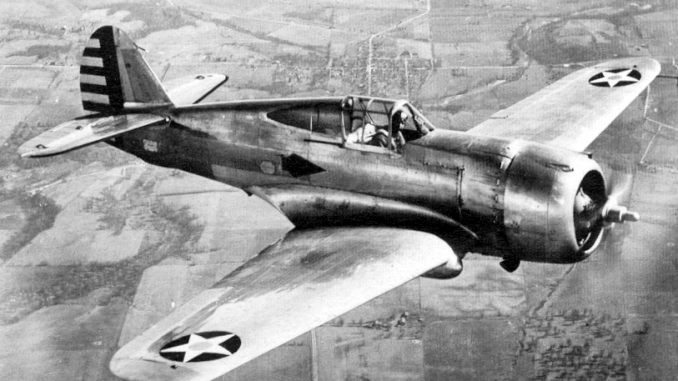
Curtiss P-36 Hawk Fighter
Apparently, having heard of the Japanese attack on Kaneohe and Bellows fighter, control directed Sanders’ flight in that direction. Sanders positioned his flight to jump a Japanese formation of about eleven aircraft. A series of wild actions against Japanese fighters ensued. Sanders claimed a victory and a probable. 2Lt. Philip Rasmussen claimed one victory. 2Lt. Sterling was credited with a victory. 2Lt. John Thacker’s guns jammed. He returned in a fighter damaged by cannon fire. Sterling was shot down and killed. Rasmussen managed to return in a badly damaged fighter that was a write off. This action was with fighters from Soryu, nine of which were part of the second wave attack. Three were lost, one of them to ground fire. One fell in this combat. Another may have been damaged in this combat and was apparently lost trying to make for Niihau Island the designated rescue point. The flight leader Lt. Iyozo Fujita returned to Soryu but his Zero was so damaged it was jettisoned. This result of P-36s versus Zeros is remarkable. It was no doubt facilitated by ground control sending the interceptors to the right location and their initial advantageous position.
In addition to eleven fighter pilots who took off and managed to engage the Japanese, other pilots took off but were too late or too unlucky to intercept any enemy planes. In total, about twenty-five pilots attempted to intercept the Japanese.
The final aerial encounter took place far from Oahu and was another remarkable encounter. Hours after the last Japanese aircraft had rendezvoused and headed for their carriers, an errant Zero came upon two SOC biplanes from cruiser U.S.S. Northampton on patrol near Kauai. The Zero carried out seven firing passes. The floatplanes stayed together low over the water and made slow turns during each attack run. Their gunners returned fire and thought they made hits. After more than a quarter hour the Zero gave up. One SOC suffered fourteen hits and the other eleven. There were no personnel injuries. All hits were considered .30 caliber except one possibly of .50 caliber. The only potentially serious damage was a hit on an oil line which fortuitously sealed itself. This was almost certainly the work of Hiryu pilot Petty Officer Shigenori Nishikaichi. He later crash landed and was the central figure in the Niihau Incident.
Combined with the lack of early warning from long range patrols, an aircraft warning system with excellent radars but deficient command and control doomed the air defense effort over Hawaii to heroic failure.
NOTE– American intelligence officers and fighter pilots had (at best) sketchy knowledge about the new Japanese (Zero) fighter. They also knew the Japanese operated fighters and other aircraft with fixed landing gear. Thus Type 99 carrier bombers might be misidentified as fighters and Zero fighters carrying a large external fuel tank were in some instances thought to be scout bombers. The commander of Enterprise’s air group related he was attacked by a “low wing monoplane with retractable landing gear”. Dive bombers he observed looked like the “Karigane Mk. II” illustrated in Jane’s Aircraft. Another Navy pilot said the fighter that attacked him had an appearance like a P-36. Some authors are unhelpful in this regard. After the fact descriptions of this and other early actions use American codenames for Japanese aircraft. The familiar codenames (Zeke, Val, Kate) were not adopted by the U.S. Southwest Pacific command for more than ten months after these actions. They were only gradually adopted in other theaters. Some publications use Japanese model-type designations. Such designations (A6M2, B5N2) often were not known by their Japanese pilots who knew their aircraft by its official service designation (Type Zero Carrier Fighter or Type 97 Carrier Attack Bomber etc.). Use of codenames or model-type designations by some authors may imply a certainty of identification that did not exist.